

The Rise of Data Activators: Turning Insights into Automated Actions
For years, the promise of analytics has been simple: collect data, analyze it, and make smarter decisions. But in today’s world, where speed defines success, insights alone aren’t enough anymore.
Businesses don’t just need to know what happened; they need systems that automatically respond when it happens.
That’s where Data Activators come in: a new era of intelligence where data doesn’t just inform; it acts.
What Are Data Activators?
A data activator is a real-time engine that monitors your data for specific conditions or changes and automatically triggers actions when those conditions are met. In simple terms, it’s like giving your data to a brain.

Instead of waiting for a human to notice a KPI drop or a sales spike, a data activator reacts instantly.
For example:
- If website traffic spikes by 40%, it can automatically trigger an email campaign.
- If inventory falls below a certain threshold, it can notify procurement teams or reorder stock.
- If customer sentiment turns negative on social media, it can alert the support team to intervene.
Why Businesses Need Data Activation
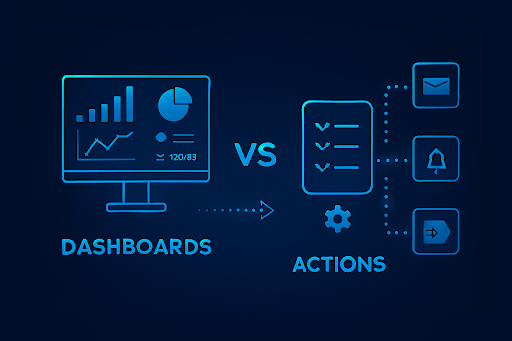
Traditional dashboards are powerful, but they’re reactive. They tell you what’s happening, but only after you look.
Data Activators, on the other hand, make analytics proactive and operational.
Here’s why they’re becoming a gamechanger:
- Speed to Action: No more waiting for weekly reports; insights become instant actions.
- Efficiency: Automating routine tasks saves time and reduces manual effort.
- Accuracy: AI ensures that actions are based on consistent, real-time data.
- Empowerment: Teams spend less time chasing data and more time focusing on strategy.
The Technology Behind Data Activators
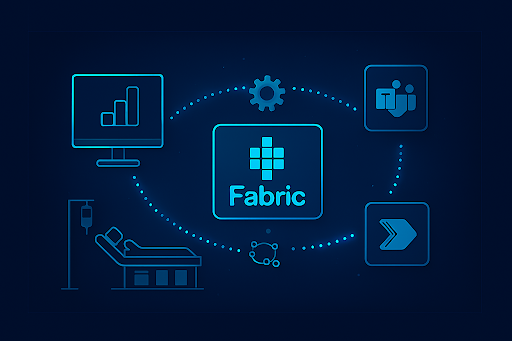
These platforms combine event-driven triggers, AI models, and cloud workflows into one integrated ecosystem.
Here’s how it works:
- Event Detection: The system continuously monitors KPIs and metrics.
- Trigger Setup: You define the conditions that should spark an action, like “sales drop below target” or “machine temperature exceeds threshold.”
- Automated Response: When the event occurs, it can automatically send alerts, write data back to systems, or initiate workflows in tools like Power Automate, Teams, or CRM.
It’s like connecting your analytics with your operations seamlessly.
Real-World Use Cases
1. Retail:
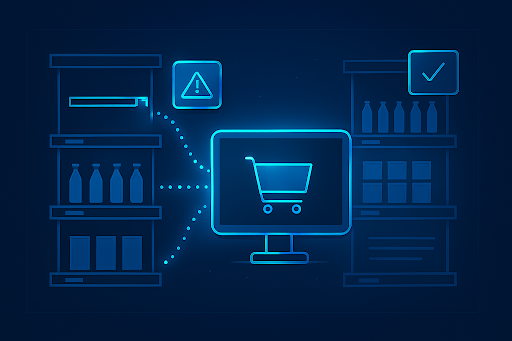
A retailer uses a data activator to monitor product demand in real time. When sales for a specific item surge, the system automatically adjusts warehouse replenishment orders.
2. Manufacturing:
Sensors feed equipment data into Fabric. If machinery shows abnormal temperature spikes, an activator instantly alerts maintenance teams and logs an incident.
3. Finance:
Banks use activators to detect fraudulent transactions as they occur, freezing suspicious accounts before damage spreads.
4. Healthcare:
Hospitals track patient vitals through IoT data. If a reading crosses a danger threshold, doctors are immediately notified through Teams.
From Insight to Impact
What makes Data Activators revolutionary isn’t the technology; it’s the shift in mindset.
We’re moving from a world where people react to dashboards to one where dashboards react to people and systems.
This closes the gap between insight and execution, enabling true decision intelligence.
In essence, the organization itself becomes smarter, faster, and self-correcting.
The Future of Analytics Is Alive
In 2025 and beyond, Data Activators are redefining what it means to be “data-driven.”
The focus is no longer just on visualizing data; it’s about operationalizing it.
As more enterprises adopt Microsoft Fabric and real-time BI tools, we’ll see analytics evolve from reporting tools into decision engines.
The future of data isn’t about dashboards that inform. It’s about systems that act.
FAQs
Data Activators are real-time engines that monitor data and automatically trigger actions when predefined conditions or events occur.
Data activators automate responses to real-time events, helping organizations reduce manual effort, improve efficiency, and respond faster to changing conditions.
Data activators continuously monitor KPIs, detect predefined events, and automatically trigger alerts, workflows, or system updates when conditions are met.
Retail, manufacturing, finance, and healthcare can use Data Activators to automate responses, monitor critical events, and improve operational efficiency.
Data activators transform analytics from reactive reporting into proactive decision-making by connecting real-time insights with automated business actions.