
Introduction
Data marketplaces enable organizations to securely buy, sell, and exchange data, helping businesses monetize data while providing valuable insights to buyers.
While data is seen as the “new oil,” data marketplaces offer growth opportunities along with challenges related to privacy, trust, and governance that must be carefully managed.
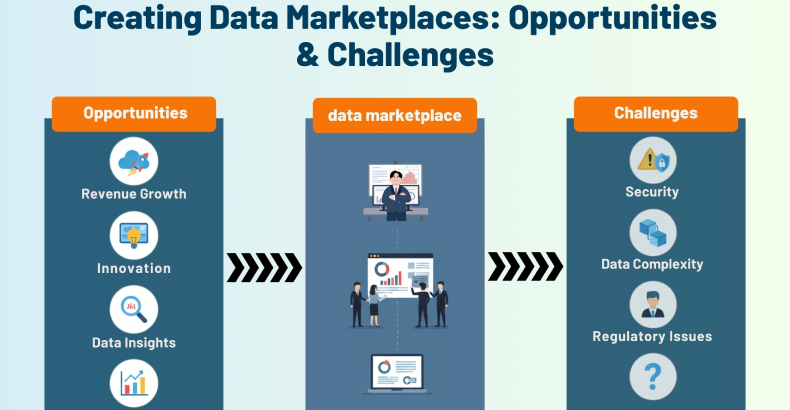
Opportunities in Data Marketplaces
1. Data Monetization
Data marketplaces enable organizations to convert raw or underutilized data into new revenue streams. By selling anonymized and compliant datasets, businesses can maximize the value of existing data assets without disrupting core operations.
2. Access to High-Quality Data
For buyers, data marketplaces provide access to curated, verified, and well-documented datasets. This significantly reduces the time and effort required for data collection and preparation, enabling faster adoption of AI, machine learning, and advanced analytics.
3. Democratization of Insights
Data marketplaces level the playing field by making valuable data accessible to startups, SMEs, and innovators who previously lacked the resources to collect large-scale datasets. This democratization of data empowers smaller organizations to compete with larger enterprises.
4. Faster Innovation Across Industries
With readily available datasets, industries such as healthcare, finance, retail, and logistics can innovate faster. Data marketplaces accelerate experimentation, enable smarter decision-making, and support the development of data-driven products and services.
Challenges in Data Marketplaces
1. Data Privacy & Security
One of the biggest challenges is ensuring data privacy and regulatory compliance. Marketplaces must protect sensitive information and comply with regulations such as GDPR, ensuring that data is shared ethically and securely.
2. Standardization and Interoperability
The lack of common standards for data formats, metadata, and quality makes integration difficult for buyers. Without proper standardization, data usability and scalability suffer.
3. Trust and Transparency
Buyers need confidence in the accuracy, relevance, and authenticity of the data they purchase. Building trust requires transparent data sourcing, quality assurance processes, and clear documentation.
4. Pricing and Data Valuation
Determining the fair value of data remains complex. Pricing depends on factors such as uniqueness, freshness, accuracy, and intended use, making it difficult to establish consistent pricing models.
Conclusion
The rise of data marketplaces represents a fundamental shift in how organizations create and exchange value from data. While the opportunities for monetization, innovation, and democratization are significant, success depends on overcoming challenges related to privacy, standardization, trust, and pricing.
Organizations that focus on building secure, transparent, and user-friendly data marketplaces, supported by strong governance and ethical practices, will be best positioned to thrive in the data-driven future.