
Introduction
In today’s digital economy, data is no longer just operational information. It has become one of the most valuable strategic resources organizations possess. From enabling analytics and AI to improving customer experiences and unlocking new revenue opportunities, data plays a critical role in business growth.
However, unlike physical or traditional intangible assets, data is difficult to measure, value, and report financially. This creates an important challenge for modern enterprises: how to recognize and manage data as a true business asset.
The Growing Importance of Data
Every digital interaction generates valuable data, including customer transactions, online behavior, feedback, and operational metrics. When properly managed and analyzed, this data helps organizations:
- Improve customer experience through personalization
- Increase operational efficiency
- Forecast demand and market trends
- Reduce business risks
- Identify new revenue opportunities
These benefits show that data creates future economic value, which is a key characteristic of a capital asset.
Why Data Should Be Treated as a Capital Asset
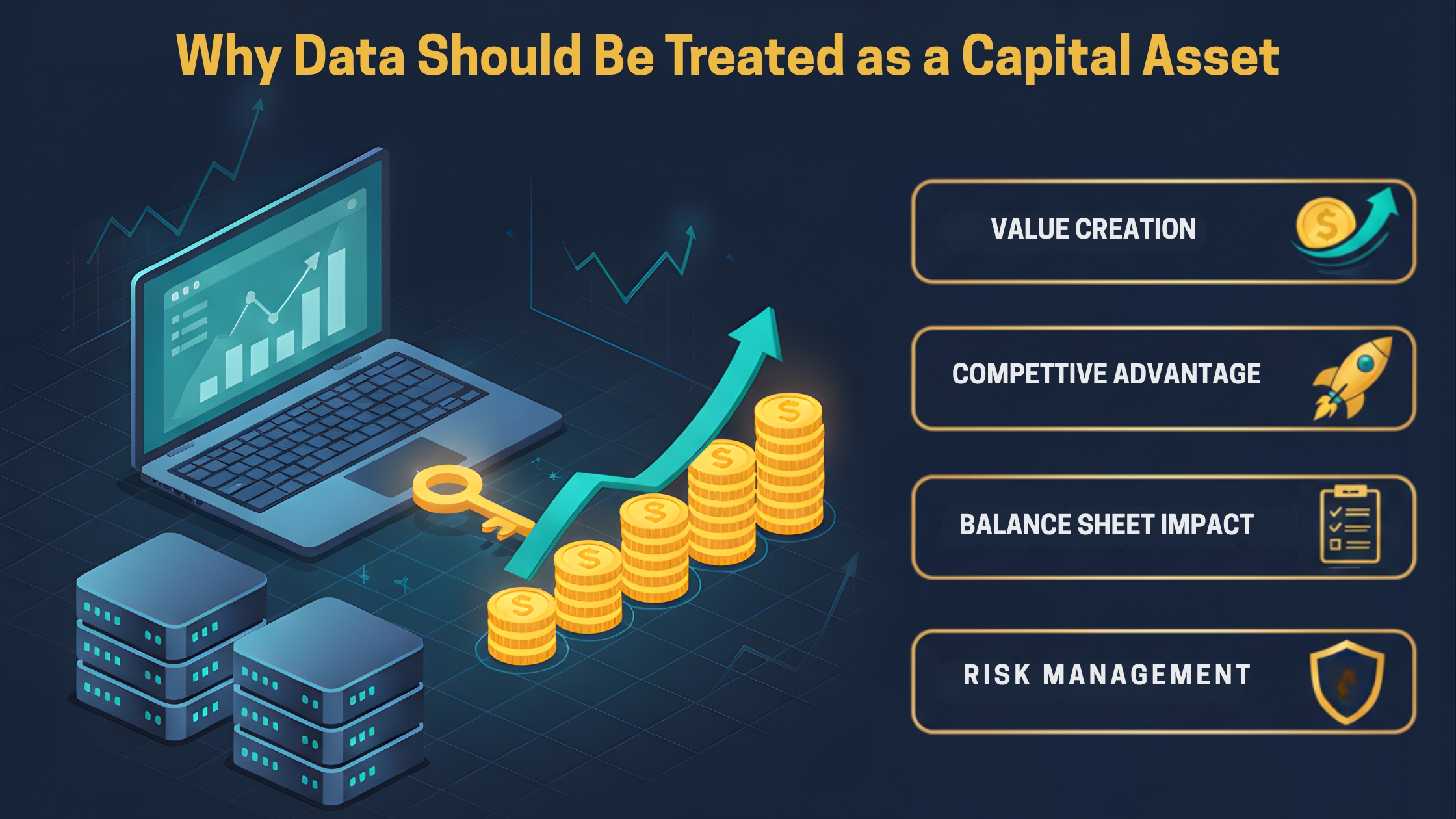
Strategic Value Creation
Data enables predictive insights, automation, and smarter decision-making. Treating data as an asset highlights its role in long-term value creation.
Competitive Advantage
Organizations with high-quality and well-governed data can deliver better services, optimize operations, and develop innovative digital products.
Reusability and Scalability
Unlike physical assets, data can be reused and enhanced across multiple business functions, increasing its value over time.
Investment and ROI Visibility
Managing data as an asset helps organizations track investments in storage, governance, and analytics while aligning data initiatives with business outcomes.
Challenges in Accounting for Data Value
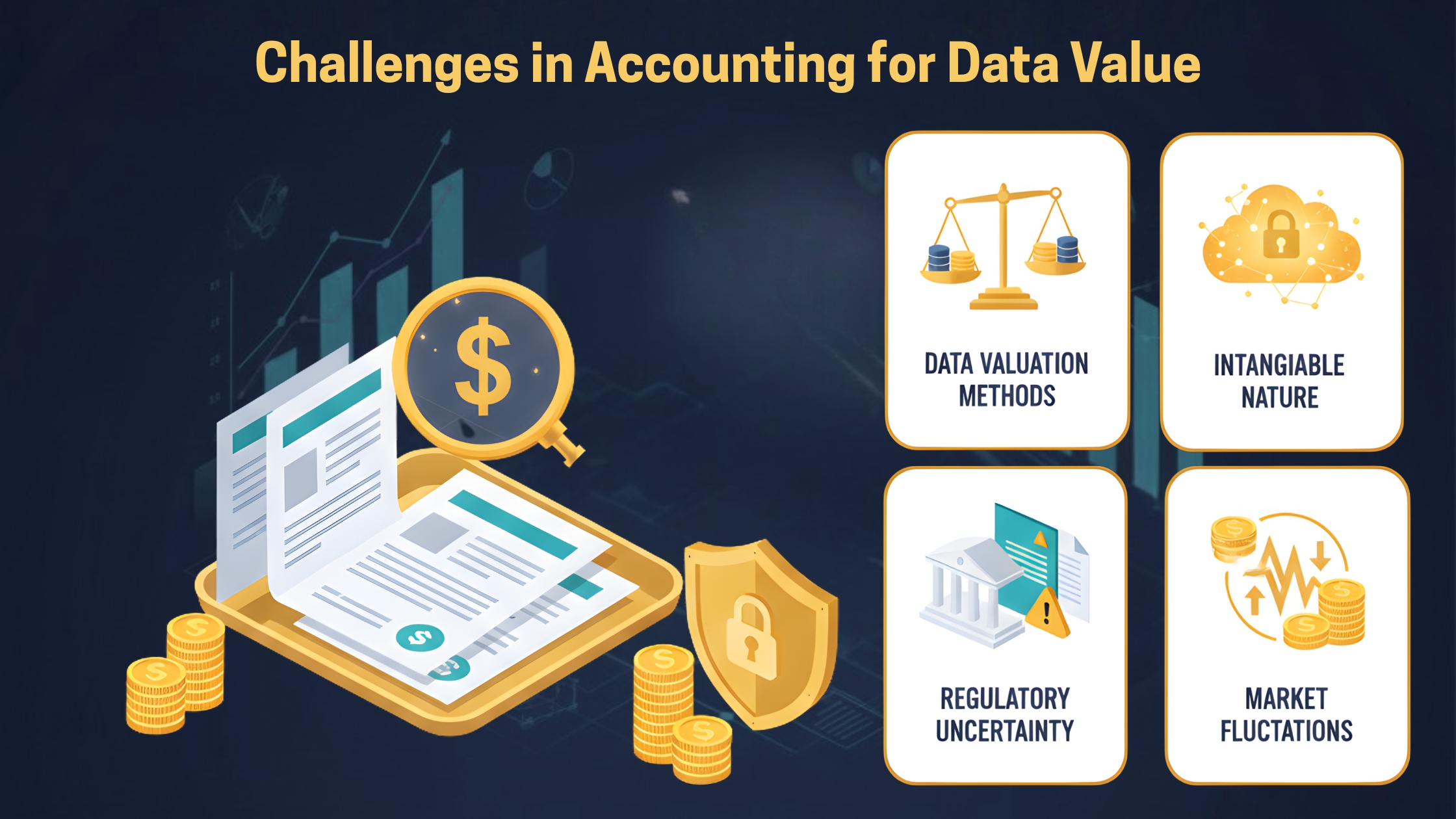
Measurement Complexity
Data does not have a fixed price. Its value depends on accuracy, relevance, usability, and uniqueness, making valuation dynamic.
Regulatory Constraints
Privacy regulations such as GDPR and CCPA limit how data can be collected, stored, and monetized, directly affecting its value.
Depreciation and Obsolescence
Data can lose relevance over time due to outdated or poor-quality information, requiring strong lifecycle management.
Lack of Standard Frameworks
There are no universally accepted accounting standards for data valuation, leading to inconsistent reporting across organizations.
Practical Approaches to Valuing Data
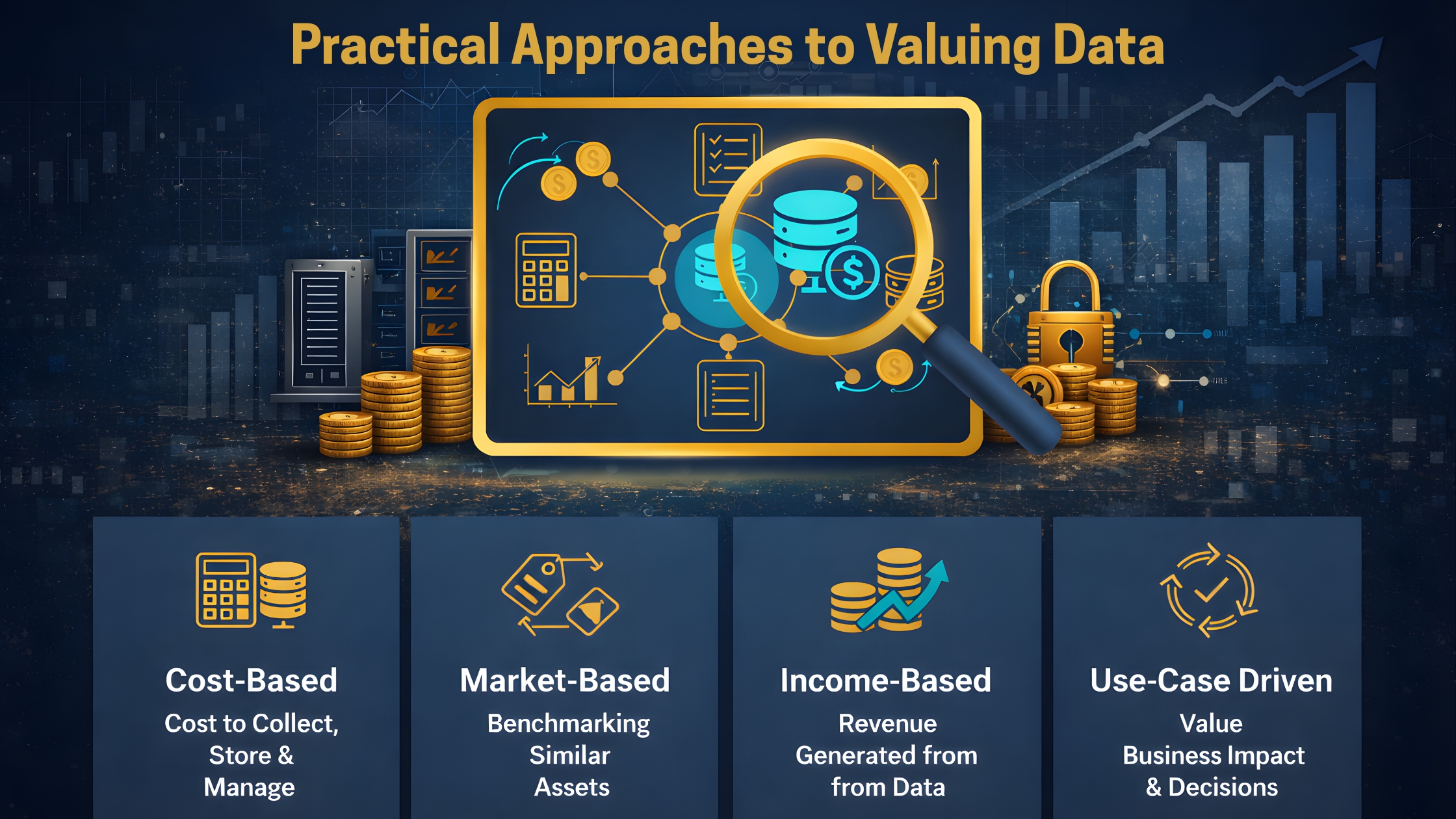
Cost-Based Valuation
Measures the cost of collecting, storing, managing, and securing data. This method is simple but does not capture the full business value.
Market-Based Valuation
Estimates value by comparing similar datasets sold in data marketplaces. This provides external benchmarks but depends on market availability.
Income- or Utility-Based Valuation
Evaluates how data contributes to revenue growth, cost savings, and performance improvement. This approach best reflects real business impact.
Why This Matters
Organizations that treat data as a capital asset are more likely to:
- Invest in strong data governance and security
- Maintain high data quality and reliability
- Use analytics strategically across the enterprise
- Develop new data-driven products and services
Recognizing data as an asset helps organizations manage it with discipline and maximize long-term returns.
Conclusion
Data is no longer just information; it is a strategic business resource. Organizations that understand and manage the financial value of their data will gain stronger competitive advantages, improve decision-making, and drive sustainable growth in the digital economy.