
Today, every organization is surrounded by data from apps, customers, operations, and digital systems. The real challenge is not collecting data but organizing it, understanding it, and using it wisely.
Many businesses have data spread across multiple tools and platforms. This creates silos, confusion, and slow decisions. Teams spend more time finding data than using it.
This is where Power BI Fabric architecture helps.
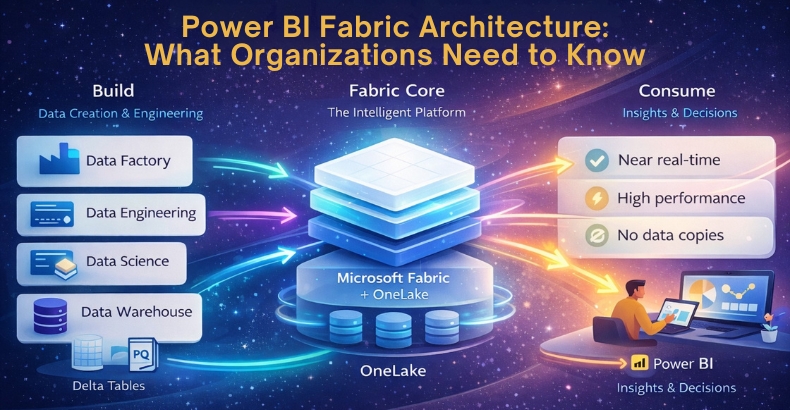
Built by Microsoft, Microsoft Fabric brings data tools together into one unified platform so organizations can manage, analyze, and use data more easily.
What is Power BI Fabric?
In simple words, Microsoft Fabric is an all-in-one analytics platform where:
- Data is collected
- Data is cleaned.
- Data is stored
- Data is analyzed.
- Reports and dashboards are created
- AI insights are generated.
All inside one ecosystem.
Instead of jumping between tools, teams can work in one connected environment.
OneLake: One Home for All Data
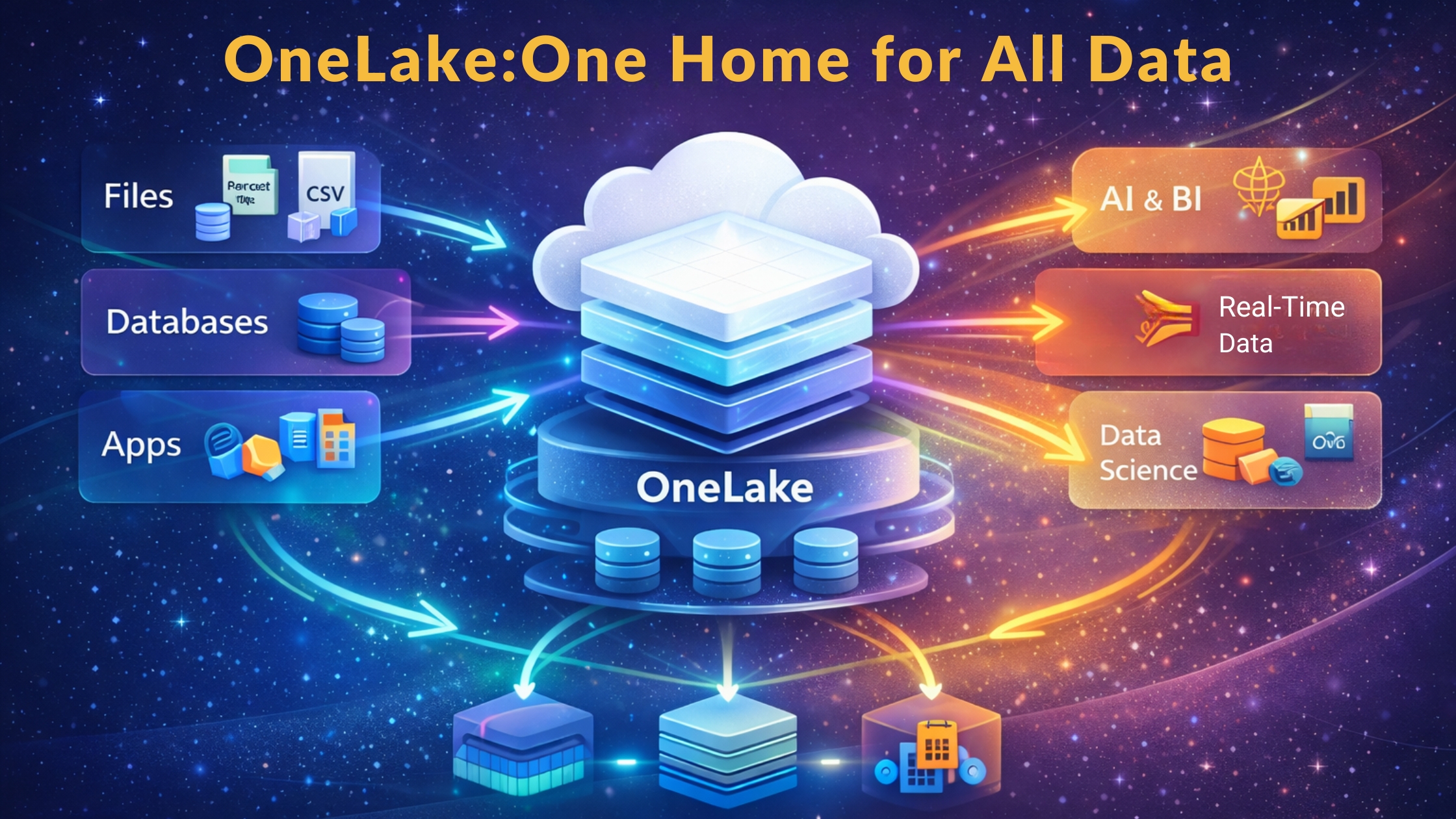
At the center of Fabric is OneLake.
Think of it as a single, secure home where all company data lives.
This means:
- Less duplicate data, so resources aren’t wasted and storage stays clean
- Everyone works from the same, consistent data, reducing confusion and misalignment.
- More trust in numbers, making reports and dashboards more reliable
- Easier governance, with clear rules and controls over who can access and modify data
When data is organized, decisions become clearer.
Core Parts of Fabric
Data Engineering
Raw data is collected, cleaned, and transformed into a structured format for accurate analysis and better decision-making.
Data Warehousing
Structured data is stored in centralized systems, enabling fast SQL queries, reporting, and historical analysis.
Real-Time Analytics
Live data is processed instantly, allowing organizations to monitor performance and react quickly to changes.
Power BI Reporting
Data is converted into interactive dashboards and reports using Microsoft Power BI, helping leaders track KPIs and make informed decisions.
AI and Machine Learning Capability
Fabric integrates AI and machine learning features that help organizations generate predictive insights, automate analysis, and build intelligent data models. Built-in AI tools allow teams to discover patterns, forecast trends, and create advanced analytics solutions without heavy infrastructure setup.
Why Organizations Are Choosing Fabric
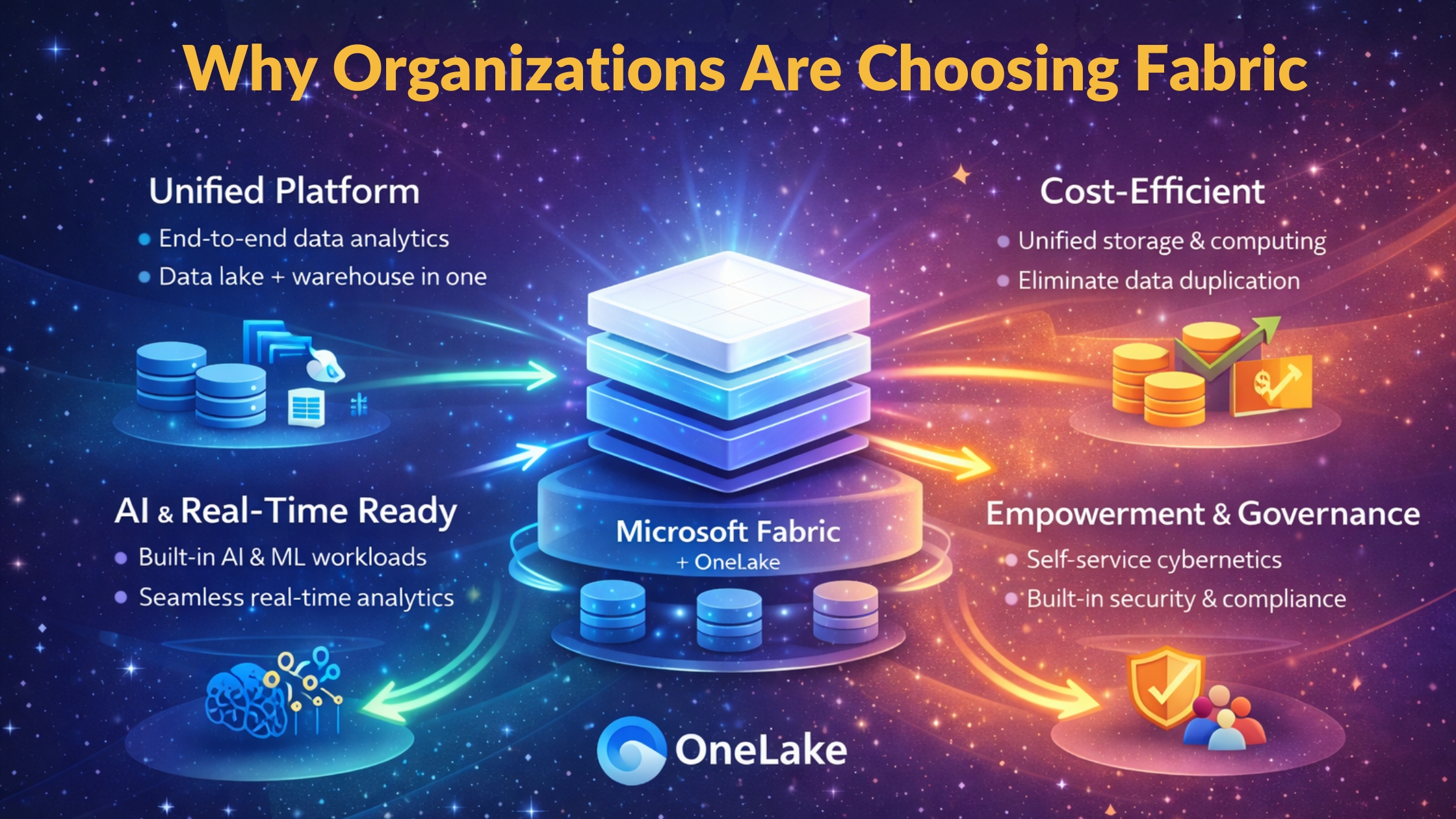
Because it makes data work simpler:
- One unified platform that brings all your data and tools together in a single ecosystem
- Better data control with stronger governance, security, and visibility
- Faster insights through streamlined processing and real-time analytics
- Easy scalability that grows seamlessly with your business needs
- Cost efficiency by reducing infrastructure complexity and operational overhead
- Built-in AI and advanced analytics capabilities to drive smarter, data-driven decisions
Most importantly, teams stop wasting time searching for data and start using it.
Real Business Impact
When data is unified and well-managed:
- Decisions happen faster with access to accurate, real-time information.
- Planning becomes smarter through deeper visibility and predictive insights.
- Errors are reduced thanks to consistent data governance and automation.
- Growth opportunities appear sooner as trends and patterns become easier to spot.
- AI-driven insights enhance forecasting, optimize operations, and power intelligent automation.
Data stops being a burden and becomes a business asset.
Conclusion
Power BI Fabric architecture gives organizations a practical and modern way to manage data. It connects the full data journey from raw data to insights and intelligent analytics.
In a data-driven world, success doesn’t come from having data. It comes from understanding and using it well.
Organizations that simplify their data environment with platforms like Fabric are better prepared for growth, innovation, and AI-driven transformation.