
Introduction
Banks, financial institutions, and insurance companies handle large volumes of data every day. From loan applications and customer transactions to insurance claims and compliance records, every activity can reveal important financial and operational risks.
The challenge is identifying potential issues before they become serious problems. When information is scattered across different systems, understanding the complete picture becomes difficult.
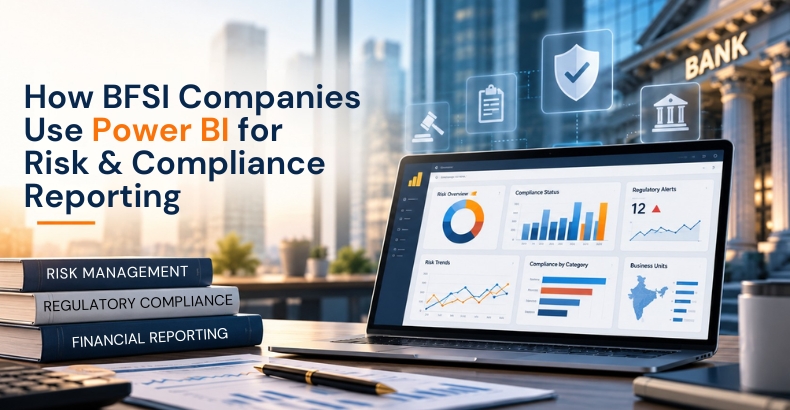
Power BI helps BFSI companies bring critical information into interactive dashboards, making it easier to monitor risks, track compliance activities, and make informed decisions.
Why Risk and Compliance Reporting Matters in BFSI
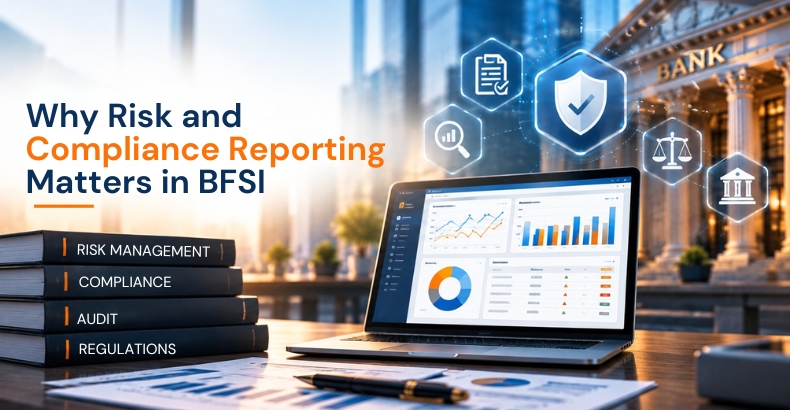
BFSI organizations must balance financial performance, regulatory responsibilities, operational efficiency, and customer trust. Manual reporting and disconnected spreadsheets can delay analysis and make emerging risks more difficult to identify.
Power BI helps transform scattered information into meaningful insights, enabling teams to understand business performance and investigate potential concerns.
Key benefits include:
- Better visibility into financial and operational risks.
- Faster reporting with less manual effort.
- Improved monitoring of compliance activities and internal controls.
1. Credit Risk Monitoring
Credit risk is a major concern for banks and lending institutions. Delayed repayments and loan defaults can affect profitability and increase financial exposure.
Power BI dashboards help risk teams analyze loan portfolios across customer segments, regions, and loan categories. By reviewing historical trends, analysts can identify areas that may require closer attention.
Common metrics include:
- Loan default rates and overdue payments.
- Non-performing assets (NPAs).
- Outstanding loan balances and risk exposure.
For example, if overdue payments increase within a particular loan category, analysts can investigate the trend and assess whether additional risk controls are needed.
2. Fraud Detection and Transaction Monitoring
Financial transactions generate valuable insights, but unusual activity can be difficult to identify manually when transaction volumes are high.
Power BI can visualize transaction patterns and display alerts generated by fraud detection systems. Analysts can examine unusual transaction values, activity trends, and investigation statuses to prioritize their work.
Dashboards may highlight:
- Unusual transaction patterns and fraud alert volumes.
- Pending investigations and unresolved suspicious activity cases.
Power BI supports fraud monitoring and investigation, while effective fraud detection depends on connected systems, validated detection rules, and timely data.
3. Regulatory Compliance Reporting
Financial institutions must meet regulatory requirements relevant to their operations and jurisdictions. Managing reporting deadlines, documentation, and internal reviews can become challenging when information is spread across multiple systems.
Power BI can help compliance teams track activities, monitor reporting progress, and identify incomplete tasks through centralized dashboards.
For example, a compliance manager can review outstanding audit findings and overdue corrective actions without manually combining multiple reports.
4. Operational Risk and Internal Controls
Operational risks can arise from system failures, human errors, process weaknesses, or ineffective internal controls. If recurring issues go unnoticed, they can affect business continuity and service quality.
Power BI dashboards can bring incident records, control exceptions, and remediation activities into a single view.
Teams can monitor:
- Open incidents and unresolved control weaknesses.
- Progress on corrective actions across departments.
By identifying recurring patterns, managers can investigate root causes and improve processes before similar issues lead to larger disruptions.
5. AML and KYC Reporting
Anti-Money Laundering (AML) and Know Your Customer (KYC) processes help financial institutions verify customer identities and manage potential financial crime risks.
Power BI can provide visibility into verification workflows, pending reviews, and investigation workloads. It can also summarize alerts generated by dedicated AML monitoring systems.
Useful metrics include:
- Pending KYC verifications and overdue customer reviews.
- AML alert volumes and unresolved investigation cases.
These insights help compliance teams manage workloads and prioritize reviews. However, suspicious activity detection and regulatory decisions still require appropriate systems and established procedures.
Connecting Risk Data for Better Decisions
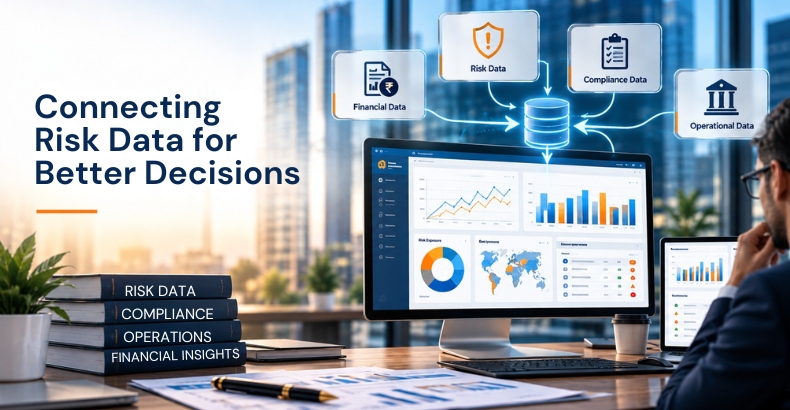
The real value of Power BI emerges when different risk and compliance reports work together.
Consider a bank reviewing its lending portfolio. By connecting loan information, repayment trends, customer segments, and relevant risk indicators, analysts can gain a broader understanding of potential exposure.
Interactive filters, drill-through reports, and historical comparisons allow users to move from an overall summary to specific categories or time periods. This makes it easier to understand what has changed and determine where further investigation may be necessary.
Why Data Security and Governance Matter
BFSI dashboards often contain sensitive financial and customer information. Reliable reporting therefore requires strong security measures and effective data governance.
Organizations should focus on:
- Role-based access and row-level security to control data visibility.
- Data validation, secure connections, and clearly defined ownership of reporting metrics.
A well-designed Power BI environment should align with broader governance policies, ensuring that sensitive information remains accurate, protected, and accessible only to authorized users.
Conclusion
Power BI helps BFSI companies transform complex financial and operational data into clear, actionable risk and compliance insights.
From credit risk and fraud monitoring to regulatory reporting, internal controls, and AML/KYC tracking, well-designed dashboards provide better visibility into important activities and emerging concerns.
The goal is not simply to automate reports. It is to help teams investigate issues efficiently, strengthen internal controls, and make informed decisions based on reliable data.
When trusted data meets effective reporting, BFSI companies can manage risks more confidently, improve compliance visibility, and strengthen customer trust.
FAQs
Power BI helps BFSI companies monitor financial risks, track compliance activities, and analyze operational performance.
It tracks loan defaults, overdue payments, non-performing assets (NPAs), and loan portfolio exposure.
Yes. Power BI visualizes transaction patterns and fraud alerts generated by connected detection systems.
It helps track pending verifications, overdue customer reviews, AML alerts, and investigation status.
They can use role-based access, row-level security, data validation, and secure data connections.