
Introduction
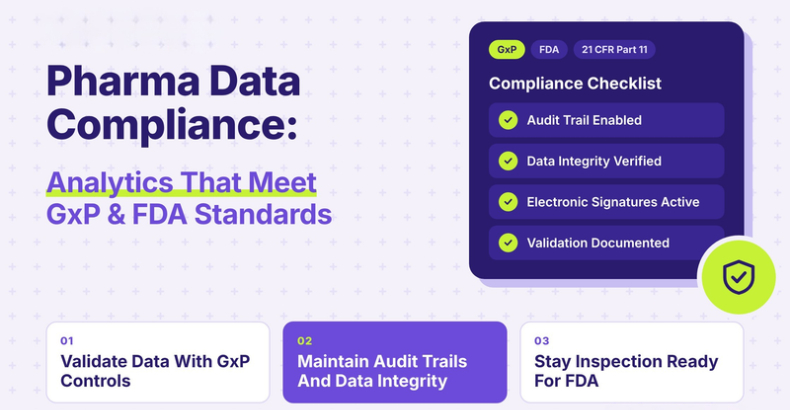
Pharmaceutical companies generate large amounts of data throughout the product lifecycle, from research and clinical trials to manufacturing, quality control, and distribution. Maintaining accurate and reliable data is essential because errors in regulated processes can affect product quality, patient safety, and regulatory compliance.
As pharmaceutical businesses adopt digital systems and advanced analytics, they must ensure that their data remains accurate, traceable, secure, and accessible when needed for audits or regulatory inspections.
Pharma data compliance with GxP and FDA standards helps pharmaceutical companies maintain data integrity, strengthen regulatory reporting, and make informed decisions through reliable data analytics and business intelligence solutions.
Why Data Compliance Matters in Pharma
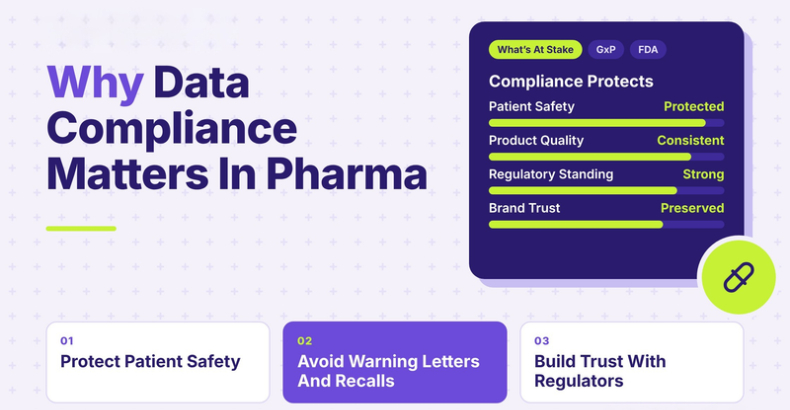
Pharmaceutical organizations rely on data from laboratory systems, manufacturing equipment, clinical research platforms, and quality management applications. This information supports decisions related to product safety, manufacturing consistency, and regulatory submissions.
Incomplete records, undocumented changes, or unreliable reports can create compliance risks and disrupt operations. A strong compliance approach helps organizations maintain consistent records, identify quality issues, protect sensitive information, and prepare for regulatory inspections.
Reliable data analytics also enables quality teams to identify recurring issues, monitor performance trends, and make better-informed decisions about corrective and preventive actions.
Understanding GxP and FDA Requirements
GxP refers to a group of good practice guidelines used in regulated industries to support the quality, safety, and integrity of products and processes. Depending on their activities, pharmaceutical companies may need to follow Good Manufacturing Practice (GMP), Good Clinical Practice (GCP), and Good Laboratory Practice (GLP).
The US Food and Drug Administration (FDA) establishes regulatory requirements for pharmaceutical activities, including requirements related to electronic records and electronic signatures. These requirements help organizations maintain reliable records, ensure data integrity, and support regulatory compliance.
One important regulation is 21 CFR Part 11, which establishes criteria under which certain electronic records and electronic signatures are considered trustworthy, reliable, and generally equivalent to paper records and handwritten signatures under the regulation.
Analytics systems must be assessed based on their intended use, applicable regulatory requirements, and organizational procedures. Using a reporting platform alone does not guarantee regulatory compliance.
The Role of Analytics in Pharma Data Compliance
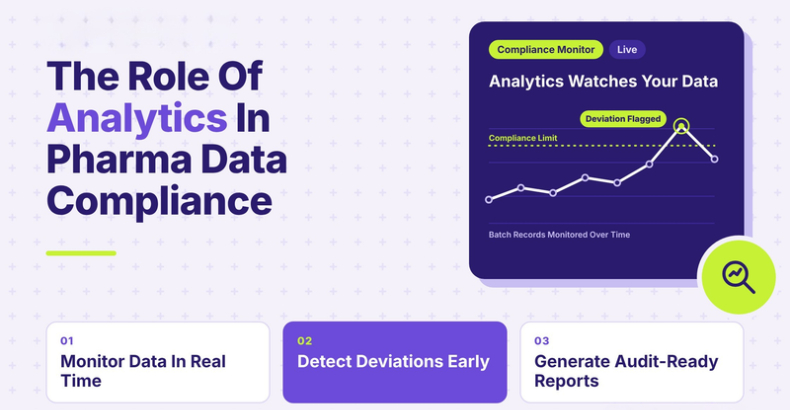
Analytics helps pharmaceutical companies monitor operations, identify unusual patterns, and improve visibility into quality and compliance activities. When supported by reliable source data and appropriate controls, dashboards can help teams identify potential issues earlier.
Common applications include:
- Quality Management: Monitor deviations, nonconformances, and corrective and preventive actions (CAPA).
- Manufacturing Analytics: Track batch performance, process trends, and production exceptions.
- Clinical Data Review: Identify missing records, inconsistencies, and unusual data patterns.
- Compliance Monitoring: Track review activities, outstanding tasks, and relevant quality indicators.
For example, a quality dashboard can highlight recurring manufacturing deviations or overdue CAPA activities. Teams can then investigate the underlying causes and take appropriate action.
Analytics supports these processes but does not replace formal quality reviews or investigations.
Ensuring Data Integrity With ALCOA+
Data integrity is fundamental to pharmaceutical compliance. The ALCOA+ principles provide a widely used framework for maintaining reliable, complete, and trustworthy data in regulated environments.
Data should be:
- Attributable: Clearly identify who performed an activity or recorded the information.
- Legible: Remain readable and understandable throughout its retention period.
- Contemporaneous: Be recorded at the time the activity occurs.
- Original: Preserve original records or appropriately verified true copies.
- Accurate: Correctly represent the activity performed.
The additional ALCOA+ principles emphasize that data should also be complete, consistent, enduring, and available when needed.
These principles are important when designing data pipelines, analytics reports, and review workflows for pharmaceutical operations. Data transformations, changes, and approvals should be managed through appropriate controls, with suitable records and audit trails to support traceability and reliability.
How Power BI and Microsoft Fabric Support Compliance Analytics
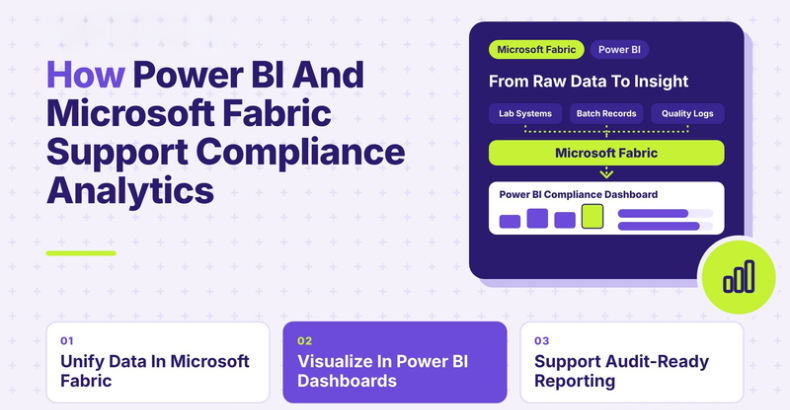
Microsoft Fabric can support data integration and preparation, while Power BI helps transform approved data into interactive dashboards and reports.
Pharmaceutical teams can use these capabilities to monitor quality indicators, review operational trends, and identify activities that require attention.
For example, a compliance dashboard might display open deviations, overdue CAPA tasks, batch records awaiting review, and quality trends across manufacturing locations.
However, Microsoft Fabric and Power BI are not automatically GxP-compliant simply because they are used in a pharmaceutical environment. Organizations must evaluate the intended use, system configuration, access controls, data integrity, auditability, and applicable validation requirements.
Where relevant, electronic records and signatures must also be assessed against 21 CFR Part 11. Appropriate controls should be established before a solution is used to support regulated activities.
Best Practices for Compliant Pharma Analytics
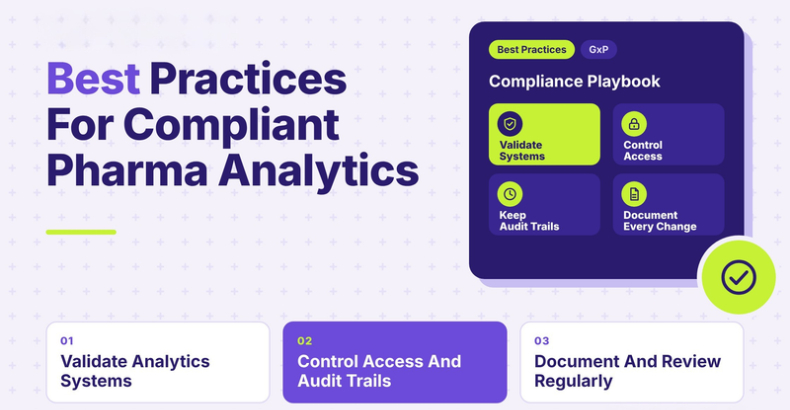
Building a reliable analytics solution requires more than connecting data sources and creating dashboards. Pharmaceutical organizations need clear procedures and appropriate controls throughout the system lifecycle.
Important practices include:
- Validate Systems: Document requirements, assess risks, and maintain evidence that the system performs as intended.
- Manage User Access: Assign permissions according to job responsibilities and review them regularly.
- Maintain Traceability: Ensure that relevant data changes and transformations can be explained and documented.
- Protect Data Quality: Check for missing, inconsistent, or invalid information.
- Document Changes: Review and approve relevant changes to systems, reports, and data workflows.
- Train Employees: Ensure that users understand their responsibilities and follow approved procedures.
The exact controls depend on the system’s intended use, risk level, and applicable regulations. A risk-based approach helps organizations focus their validation and governance efforts where they are most important.
Conclusion
Pharma data compliance is essential for maintaining data integrity, product quality, and confidence in regulated processes. As pharmaceutical companies adopt modern analytics, they must ensure that their data workflows align with applicable GxP requirements and FDA regulations.
By combining strong data governance, appropriate system validation, ALCOA+ principles, and carefully designed analytics, organizations can improve visibility into quality and compliance activities while maintaining reliable records.
Microsoft Fabric and Power BI can support these efforts when implemented with appropriate controls. Ultimately, the goal is to turn pharmaceutical data into actionable insights without compromising the accuracy, traceability, and reliability required in a regulated environment.
FAQs
Pharma data compliance ensures pharmaceutical data remains accurate, traceable, secure, and aligned with applicable regulatory requirements.
GxP guidelines support product quality and safety, while FDA regulations establish requirements for pharmaceutical processes and records.
ALCOA+ principles help ensure pharmaceutical data is attributable, legible, accurate, complete, consistent, and available when needed.
They help integrate data, monitor quality indicators, identify trends, and track compliance activities when implemented with appropriate controls.
No. Organizations must assess system validation, access controls, audit trails, data integrity, and applicable regulatory requirements.