
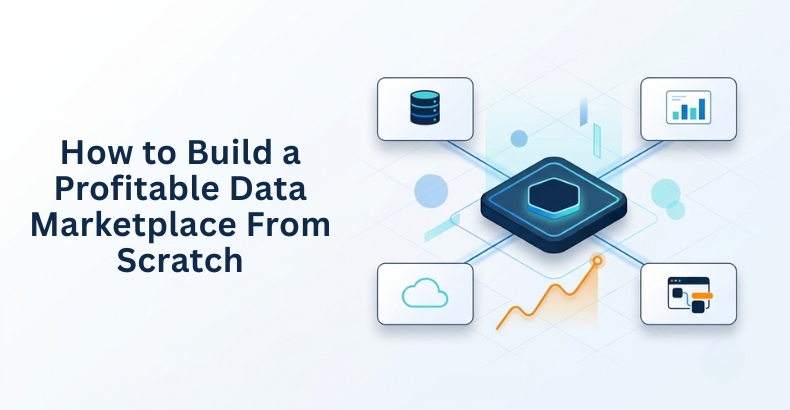
Turning Data into a Revenue-Generating Asset
Introduction
Every business generates data, from customer interactions and online transactions to supply chain activities and operational processes. For years, most organizations viewed this information simply as a tool for reporting and decision-making. Today, that mindset is changing.
Forward-thinking companies are realizing that data isn’t just a business asset; it can also become a profitable product.
This shift has given rise to data marketplaces, where organizations securely share, buy, sell, or exchange valuable datasets. Whether it’s customer insights, market trends, logistics data, or AI-ready datasets, businesses are creating entirely new revenue streams from information they already own.
However, building a successful data marketplace isn’t as simple as uploading data and expecting customers to buy it. Long-term success depends on quality, trust, governance, and delivering real value to users.
Understanding a Data Marketplace
Think of a data marketplace as an online marketplace, but instead of selling physical products, businesses offer data products.
These may include datasets, APIs, business intelligence reports, predictive analytics models, or industry-specific insights. Buyers use these resources to improve decision-making, train AI models, develop new products, or gain a competitive advantage.
As AI and advanced analytics continue to grow in 2026, the demand for reliable, high-quality data is increasing faster than ever.
Start with data that creates value.
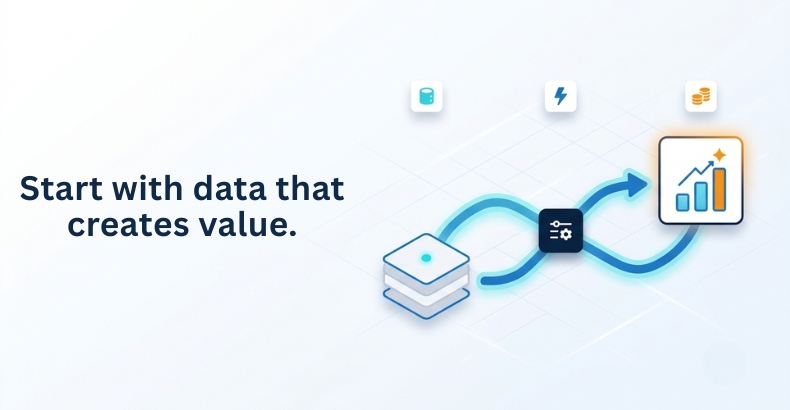
Not every dataset deserves a place in a marketplace.
Customers pay for data that solves real business problems, saves time, or provides unique insights they cannot easily collect themselves.
The most valuable datasets usually share a few characteristics:
- They are accurate and reliable.
- They are updated regularly.
- They solve a specific business challenge.
- They are difficult to obtain elsewhere.
Before launching a marketplace, organizations should evaluate their existing data assets and identify which information delivers measurable value for potential buyers.
Build Trust Before Revenue
No one buys data they don’t trust.
That’s why governance should be the foundation of every data marketplace, not something added later.
A strong governance framework includes clear ownership, security policies, compliance controls, metadata management, and quality standards. Buyers should know exactly where the data comes from, how it is maintained, and whether it complies with privacy regulations.
Trust is often the biggest factor that determines whether customers purchase once or continue buying over the long term.
Data Quality Is Your Biggest Competitive Advantage
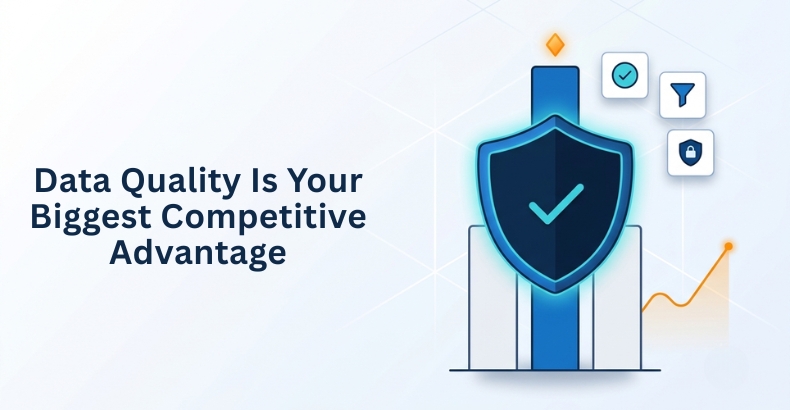
A marketplace is only as valuable as the quality of the data it offers.
Incomplete, outdated, or inconsistent information quickly damages credibility and reduces customer confidence. On the other hand, clean, well-documented, and regularly updated datasets become long-term business assets.
Organizations should invest in:
- Automated data validation
- Continuous quality monitoring
- Regular dataset updates
- Clear documentation and metadata
Reliable data not only attracts more buyers but also supports premium pricing.
Make Security a Business Priority
Sharing data always involves responsibility.
Customers need confidence that sensitive information is protected and that access is carefully controlled. A secure marketplace should include encryption, user authentication, role-based permissions, audit logs, and continuous compliance monitoring.
Strong security doesn’t simply reduce risk; it strengthens customer confidence and encourages long-term adoption.
Make Buying Data Simple
Even valuable data won’t generate revenue if customers struggle to find or understand it.
Successful marketplaces focus heavily on user experience. Every dataset should include clear descriptions, searchable metadata, sample previews, update frequency, and quality indicators.
The easier customers can evaluate a dataset, the more likely they are to purchase it.
Sell Insights, Not Just Data
The most successful data marketplaces rarely focus on raw datasets alone.
Instead, they create value-added products such as industry benchmarks, predictive analytics datasets, AI training data, business intelligence reports, or enriched customer insights.
Businesses are often willing to pay significantly more for actionable insights because they help solve problems faster than raw information ever could.
Challenges to Expect
Like any digital business, data marketplaces come with challenges. Organizations must continuously manage privacy regulations, maintain data quality, establish fair pricing, and build customer trust.
These challenges never completely disappear, but businesses with strong governance and transparent processes are far better positioned for long-term success.
Conclusion
Building a profitable data marketplace is about much more than selling information. It’s about creating a trusted platform where high-quality data becomes a valuable business product.
Organizations that focus on governance, security, transparency, and customer value will create sustainable revenue opportunities while supporting innovation across industries.
As AI, cloud computing, and digital transformation continue to reshape the business landscape, demand for trusted data will only continue to grow.
The companies that succeed won’t simply collect data.
They’ll package it, protect it, and transform it into one of their most valuable revenue-generating assets.
Because in today’s digital economy, data is no longer just something you store.
It’s something you can sell, scale, and grow.