
Introduction
AI is becoming part of everyday business, but successful AI depends on something less visible: reliable data engineering.
In 2026, organizations collect data from cloud applications, IoT devices, customer platforms, business systems, and real-time applications. The challenge is no longer simply storing this information. Businesses need to move, transform, govern, and deliver data fast enough for analytics and AI systems to use it effectively.
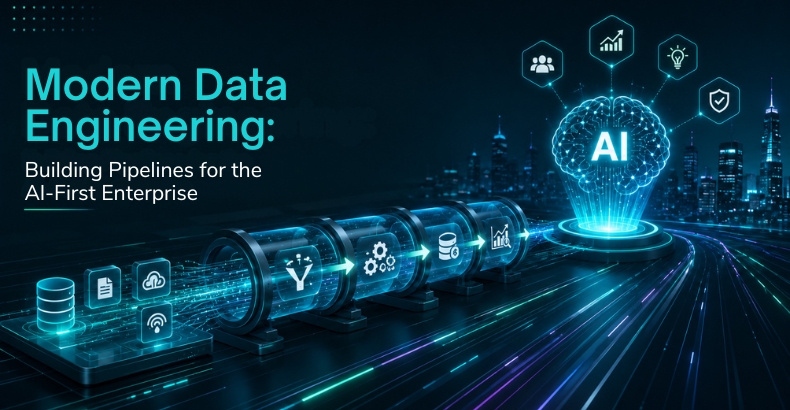
This is why modern data engineering has become essential for the AI-first enterprise. Well-designed data pipelines for AI help organizations turn raw information into trusted data for better decisions and intelligent applications.
Why Traditional Data Pipelines Are Struggling
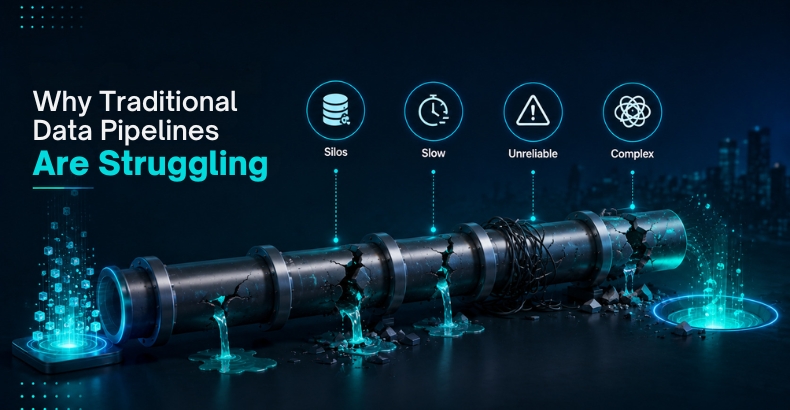
Traditional data pipelines were often designed around scheduled reports and historical analysis. Data was collected, processed overnight, and delivered to dashboards the next day.
That approach is becoming less effective.
AI applications often need fresher information. Customer behavior can change quickly, operational systems generate continuous data, and AI models may require updated information to produce relevant results.
Organizations also manage data from many sources, including:
- Cloud platforms and SaaS applications
- ERP and CRM systems
- IoT and connected devices
- APIs and external data sources
- Real-time applications
When these sources operate independently, data teams spend more time maintaining pipelines and fixing integration problems.
What Makes Modern Data Engineering Different?
Modern data engineering focuses on building flexible, scalable, and reliable systems rather than simply moving data from one location to another.
A modern pipeline should collect information from different sources, process it efficiently, apply quality and governance rules, and make it available for analytics and AI workloads.
Automation is also becoming increasingly important. Automated testing, data quality checks, monitoring, and alerts can help teams identify problems before they affect business users.
The result is a data environment that can adapt as business requirements change.
Building Data Pipelines for AI
AI introduces new requirements for data engineering.
An AI model is only as useful as the information supporting it. If data is outdated, incomplete, duplicated, or poorly structured, AI outputs can become unreliable.
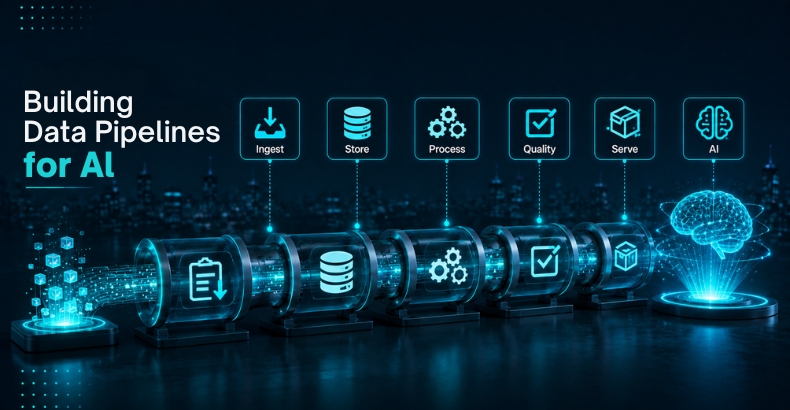
A strong AI data pipeline should focus on several areas.
Data ingestion brings information together from applications, APIs, operational systems, and streaming sources.
Data transformation cleans and prepares information for consistent use across analytics and AI applications.
Data quality helps ensure information is accurate, complete, and suitable for its purpose.
Metadata and lineage show where data came from, how it changed, and which systems depend on it.
Governance and security protect sensitive information and ensure that data is accessed appropriately.
Together, these capabilities create the foundation AI systems need to operate with greater trust.
The Role of Real-Time Data
Not every AI application needs real-time information, but many business scenarios can benefit from it.
Consider a retailer monitoring customer activity. If purchasing behavior changes suddenly, waiting for the next day’s batch process may be too late.
Real-time pipelines can support fraud detection, personalized recommendations, predictive maintenance, supply chain monitoring, and operational alerts.
The goal is not to make every pipeline real-time. Organizations should identify where fresh data creates genuine business value and design their pipelines accordingly.
Data Engineering and AI Agents
The growth of AI agents is creating another important requirement for data engineering.
AI agents may need business information to answer questions, analyze performance, or support workflows. This means data must be accessible while remaining properly governed.
Modern pipelines should therefore consider how information becomes available not only to dashboards but also to AI applications.
Trusted semantic layers, metadata, access controls, and well-managed data products can help AI systems work with business information more effectively.
This makes data engineering for AI an important part of an organization’s overall AI strategy.
What a Future-Ready Data Pipeline Looks Like
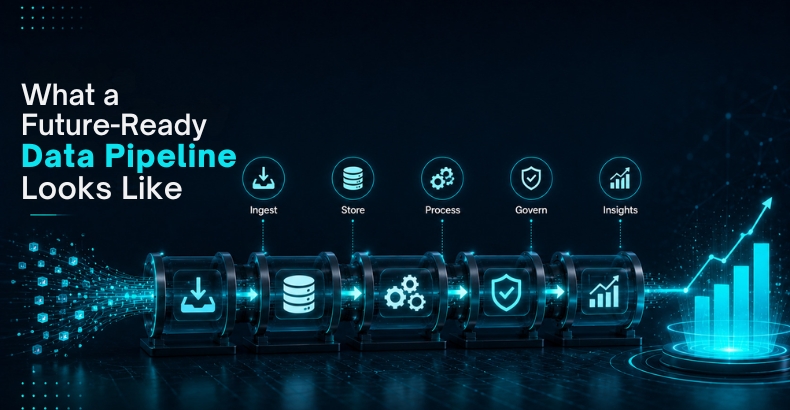
A strong modern pipeline does not need to be unnecessarily complicated. It needs to support real business requirements.
Organizations should focus on:
- Scalability: Handle growing data volumes without constant redesign.
- Reliability: Detect failures quickly and recover with minimal disruption.
- Observability: Monitor pipeline health, data quality, and performance.
- Security: Apply appropriate identity and access controls.
- Flexibility: Adapt to changing tools, platforms, and workloads.
- Automation: Reduce repetitive engineering and monitoring tasks.
These principles help reduce maintenance while creating a stronger foundation for analytics and AI.
The Business Impact
Modern data engineering delivers value beyond technical performance.
Reliable pipelines can reduce data delays, improve reporting accuracy, and support faster decision-making. They also make AI adoption easier because trusted information is already available in a structured and governed environment.
For example, a manufacturer can combine machine sensor data, production records, and maintenance history to support predictive maintenance. A retailer can connect inventory and customer behavior data to improve demand planning.
In both cases, the quality of the outcome depends heavily on the quality of the pipeline behind it.
Conclusion
An AI-first enterprise is not built on AI models alone. It requires a strong data foundation that delivers reliable, secure, and useful information.
Modern data engineering helps create that foundation by connecting data sources, automating pipelines, improving quality, and supporting real-time and AI-driven workloads.
Organizations that succeed with AI will not simply collect more data. They will build systems that deliver the right data to the right applications at the right time.
Because powerful AI starts with well-engineered data.
FAQs
Modern data engineering focuses on building scalable, reliable, and secure pipelines for analytics and AI.
Data pipelines provide AI systems with accurate, timely, and well-structured data for reliable results.
Key components include data ingestion, transformation, quality checks, metadata, governance, security, and monitoring.
Real-time data helps AI applications respond quickly to changing business conditions and support timely decisions.
Businesses should focus on scalability, reliability, observability, security, flexibility, and automation.