
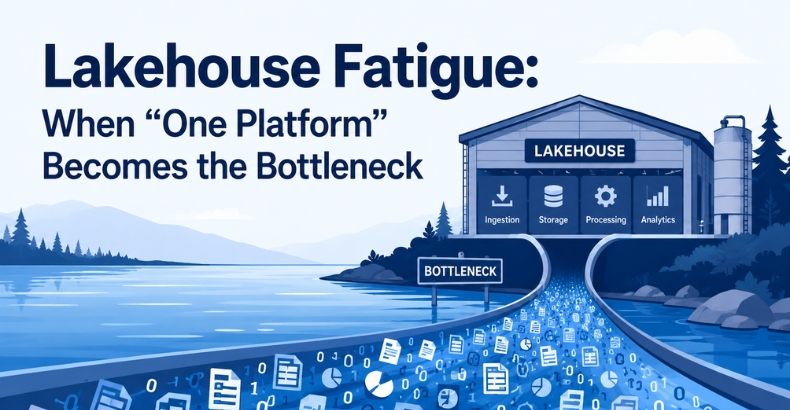
Why Simplicity Can Quietly Become Complexity
For years, the Lakehouse model has been seen as the answer to modern data complexity. The promise was an attractive one platform for storage, analytics, governance, and AI. Instead of managing multiple disconnected systems, organizations could centralize everything into a single ecosystem.
On paper, this looked like simplicity. But in reality, many organizations are now experiencing something different: Lakehouse fatigue. What was meant to reduce complexity can slowly become the reason teams experience delays, reduced flexibility, and operational bottlenecks.
When “One Platform” Starts Feeling Heavy
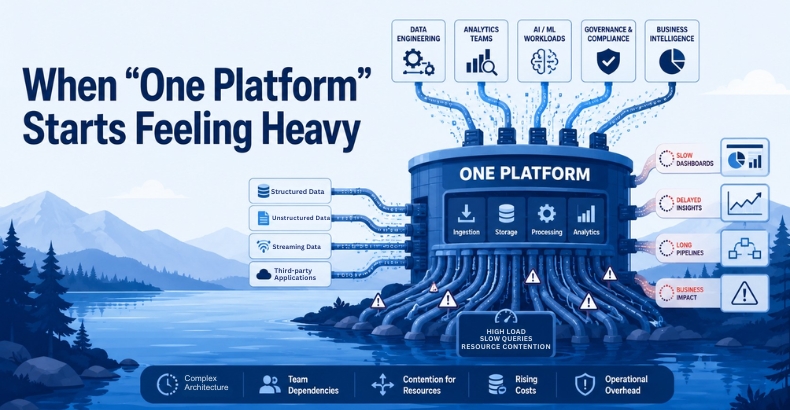
The biggest strength of a Lakehouse is unification. Data engineering, reporting, warehousing, and governance all work within one environment. This often improves collaboration, visibility, and consistency across teams.
However, as organizations scale, dependence on one environment can create pressure. When every workload and business process depends on the same platform, flexibility naturally shrinks. What once felt streamlined can begin to feel overloaded.
At that point, the platform no longer feels like just a central ecosystem; it starts acting like a bottleneck.
Why Lakehouse Fatigue Happens
Lakehouse fatigue rarely happens because the architecture is weak. It usually happens because businesses begin expecting one platform to solve every data challenge.
As workloads grow, ingestion pipelines, analytics, BI reporting, AI models, and governance frameworks all begin to compete inside the same environment. Shared infrastructure becomes crowded, operational complexity increases, and performance expectations rise.
Eventually, the “single source of truth” can quietly become a single source of friction.
The Hidden Warning Signs
The warning signs usually appear gradually rather than all at once. Businesses often notice operational strain before realizing the platform itself is becoming heavy.
Common signs include:
- Slower performance as workloads expands
- Difficulty adopting specialized tools
- Rising costs as scaling affects every connected workload
These issues often show that the challenge is moving beyond technology and becoming operational.
Why Lakehouse Platforms Still Matter
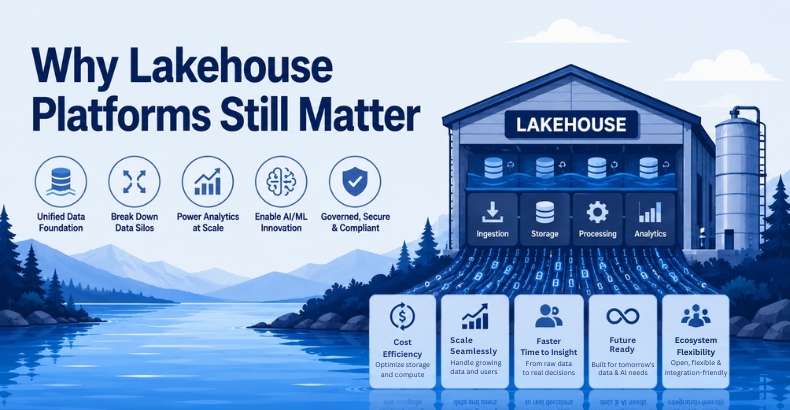
This does not mean the Lakehouse model is failing. In fact, for many organizations, it still provides strong value. Centralized systems improve collaboration, simplify governance, and reduce the complexity of managing multiple tools.
The real problem starts when businesses assume one platform should support every workload with equal efficiency. That mindset often limits adaptability.
Finding the Right Balance
The smarter strategy is not to abandon the Lakehouse model; it is to use it with balance. Organizations need to understand where centralization creates value and where flexibility matters more.
Some workloads benefit from a shared ecosystem, especially where governance and visibility are critical. Others perform better with specialized tools that offer speed or advanced functionality.
A balanced approach reduces over-dependence without creating unnecessary fragmentation.
What Smart Organizations Are Doing Differently
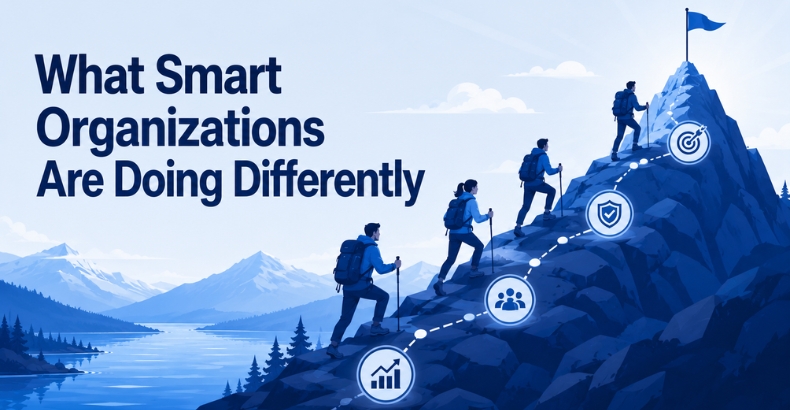
Forward-thinking businesses are no longer forcing every data process into one environment. Instead, they are building hybrid strategies that combine centralization with modular flexibility.
A few common shifts include:
- Using Lakehouse’s for shared storage and governance
- Keeping advanced tools for performance-heavy workloads
- Building hybrid architectures for long-term scalability
This helps organizations remain efficient while staying adaptable.
Conclusion
Lakehouse fatigue is not proof that unified data platforms are broken. It is proof that simplicity can become complex when stretched too far.
A Lakehouse can improve collaboration, governance, and efficiency. But when every workload, every team, and every process depend on one ecosystem, the platform itself can become the bottleneck.
The smartest organizations are not asking whether Lakehouse’s are good or bad. They are asking where centralization creates value and where flexibility becomes more important.
Because the real challenge is not having one platform.
The real challenge is expecting one platform to solve everything.
FAQs
Lakehouse fatigue occurs when a unified data platform becomes overloaded as more workloads, teams, and processes depend on the same environment, reducing flexibility and efficiency.
A Lakehouse can become a bottleneck when data engineering, analytics, AI, reporting, and governance all compete for shared platform resources as the organization scales.
Common signs include slower performance, difficulty adopting specialized tools, rising costs, and increasing operational complexity as workloads grow.
Lakehouse platforms continue to provide value by centralizing data, improving governance, simplifying collaboration, and reducing the complexity of managing multiple systems.
Organizations can reduce Lakehouse fatigue by balancing centralized governance with flexible architectures and using specialized tools where they provide greater value.