

Data Governance in BI: Striking a Balance Between Access and Control
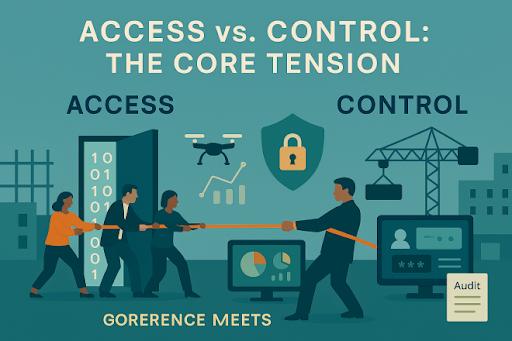
In today’s data-driven world, Business Intelligence (BI) thrives on accessibility. The more people who can access and analyze relevant data, the better decisions your organization can make. But with accessibility comes risk: uncontrolled access can lead to data breaches, compliance failures, and inconsistent reporting.
This is where Data Governance plays a critical role. The challenge? Striking the right balance between empowering users and protecting your data assets.
Why Data Governance Matters in BI
Data Governance is often perceived as a compliance requirement or technical discipline. But in the world of BI, it’s a business enabler. Effective governance ensures that:
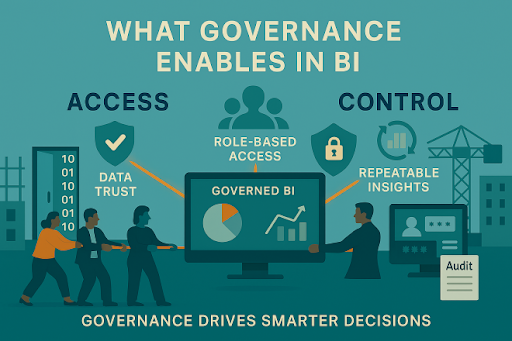
- Data is trustworthy
- Access is controlled
- Insights are consistent and repeatable
Without proper governance, self-service BI tools like Power BI, Tableau, and Looker can easily become “data chaos” tools creating conflicting reports, security vulnerabilities, and incorrect KPIs across departments.
The Two Sides: Access vs. Control
Access: Empowering Data-Driven Culture
Modern BI platforms enable non-technical users to explore data, build reports, and make faster decisions. To promote innovation and agility, organizations must:
- Provide self-service BI capabilities
- Break down data silos
- Enable role-based access to datasets
- Encourage data literacy across teams
Control: Protecting Data Integrity and Security
On the other hand, ungoverned access can lead to the following:
- Data leaks or breaches
- Misuse of sensitive information (e.g., customer PII)
- Inconsistent metrics and KPIs
- Regulatory non-compliance
To maintain control, organizations need the following:
- Centralized data policies
- Role-based permissions
- Data masking or anonymization
- Audit trails and access monitoring
Striking the Right Balance: Best Practices
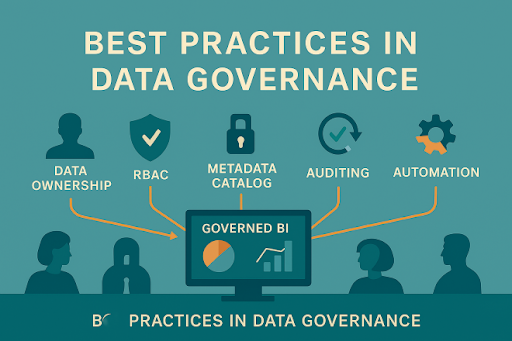
How can your organization enable wide access without sacrificing control? Here are practical strategies:
1. Define Data Ownership
Assign clear ownership for every critical dataset. Owners should approve access, ensure data quality, and manage updates.
2. Implement Role-Based Access Control (RBAC)
Control who sees what based on roles, not individuals. This reduces complexity and improves scalability.
3. Leverage Data Catalogs and Metadata
A data catalog makes data assets discoverable without exposing sensitive details. Metadata can describe data usage rules, helping users understand appropriate use.
4. Monitor and Audit Usage
Use your BI platform’s auditing features to track who accesses what data, when, and how. This supports compliance and continuous improvement.
5. Educate and Promote Data Literacy
Train employees not only on tools but also on data policies, privacy requirements, and responsible data usage.
6. Automate Governance Workflows
Real-World Example
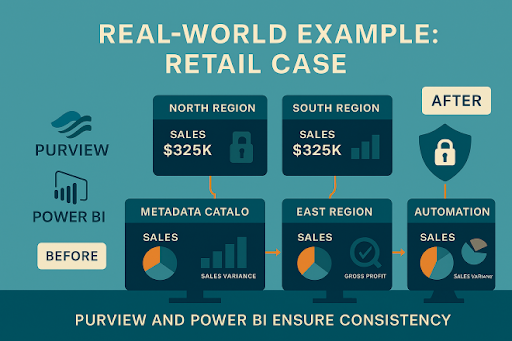
Consider a global retailer:
- Challenge: Different regions were using separate BI reports for the same KPIs, leading to inconsistent numbers reported to leadership.
- Solution: Implemented centralized data governance policies using Microsoft Purview and Power BI Dataflows. Role-based access was enforced, and a shared KPI definition catalog was introduced.
- Result: Consistent reporting across regions, reduced compliance risks, and faster, trusted decision-making.
The Role of Modern BI Tools
BI platforms today offer built-in governance features:
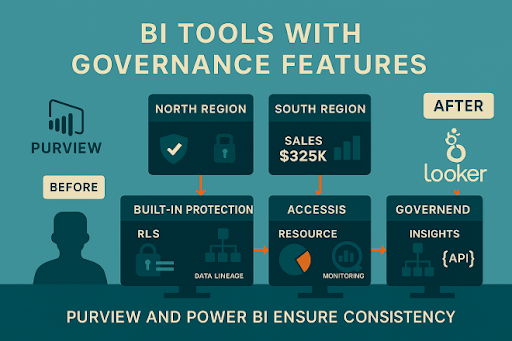
- Power BI: Row-Level Security (RLS), Sensitivity Labels, Microsoft Purview integration
- Tableau: Permissions Management, Data Lineage, Catalog Integration
- Looker: Data Models, Access Control, Governance APIs
But tools alone aren’t enough; governance is a cultural and strategic initiative.
Conclusion: Governance as an Enabler, not a Roadblock
Data governance isn’t about saying “no”; it’s about enabling responsible data use at scale. By striking the right balance between access and control, organizations can:
- Empower teams with the data they need
- Ensure trust in reports and dashboards
- Meet compliance standards
- Protect sensitive information
In modern BI, good governance isn’t optional; it’s foundational to data-driven success.
FAQs
Data governance in BI is the practice of managing data access, quality, security, and consistency to ensure trusted and reliable business insights.
Data governance helps organizations maintain data quality, protect sensitive information, ensure consistent reporting, and support compliance requirements.
Organizations can balance access and control by implementing role-based access, defining data ownership, monitoring data usage, and enforcing governance policies.
Best practices include defining data ownership, using role-based access control, maintaining data catalogs, auditing data usage, promoting data literacy, and automating governance workflows.
Modern BI tools provide features such as role-based security, data lineage, sensitivity labels, and governance integrations to help manage data securely and consistently.