
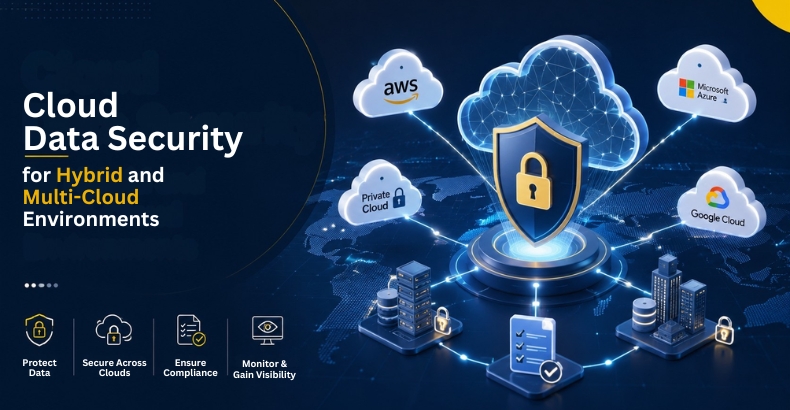
Why Securing Data Is No Longer About One Cloud
As organizations accelerate digital transformation, cloud adoption is no longer limited to a single platform. Businesses are now running workloads across private infrastructure, public clouds, SaaS applications, and distributed environments. This has created a new reality: hybrid and multi-cloud architectures are becoming the standard, not the exception.
While this shift improves flexibility, scalability, and operational resilience, it also introduces a serious challenge: cloud data security.
In the past, protecting data often meant securing one centralized environment. Today, data moves across multiple platforms, services, and access layers. That means security is no longer just about protecting infrastructure; it is about protecting visibility, access, trust, and control across complex ecosystems.
Why Cloud Security Becomes More Complex in Hybrid and Multi-Cloud Environments
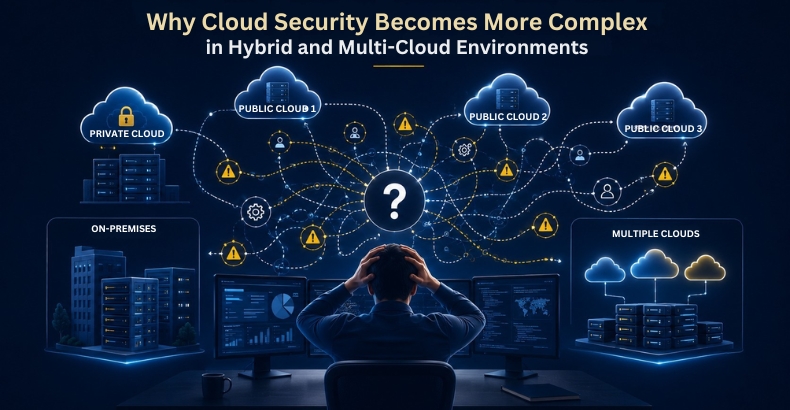
In a single-cloud setup, governance and security policies are easier to manage because systems live inside one ecosystem. But hybrid and multi-cloud environments create a much broader attack surface.
Data may move between on-premises systems, AWS, Azure, Google Cloud, SaaS applications, and third-party integrations. Each platform may have different access models, compliance rules, security controls, and monitoring tools.
As complexity grows, businesses often face a major risk: security fragmentation. When policies are inconsistent across environments, visibility weakens and vulnerabilities become harder to detect.
The Biggest Security Risks Organizations Face
Many security challenges in hybrid and multi-cloud environments are not caused by cloud platforms themselves. They are caused by lack of consistency, visibility, and governance across environments.
Some of the most common risks include:
- Misconfigured access controls across multiple clouds
- Data exposure through unmanaged integrations
- Inconsistent compliance policies
- Limited visibility into data movement and ownership
When these issues grow, organizations lose confidence in where sensitive data lives and who can access it.
Why Data Visibility Matters as Much as Protection
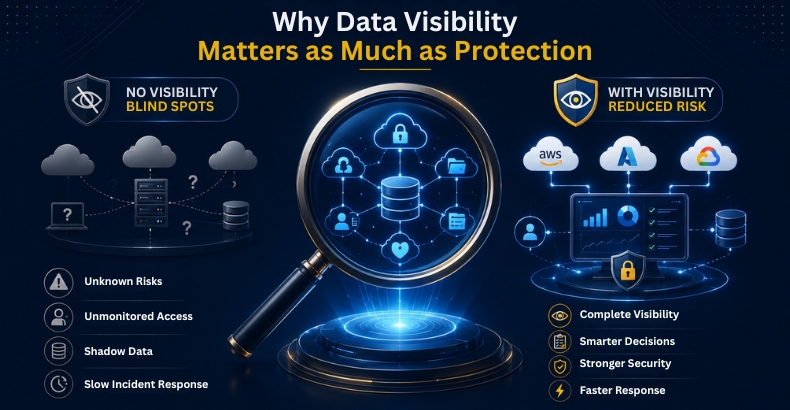
Security is not only about blocking threats; it is also about understanding where data exists and how it behaves.
In hybrid environments, data can move quickly between storage layers, analytics systems, APIs, and applications. Without clear visibility, teams may not know whether data is encrypted, duplicated, or exposed in unexpected locations.
This is where metadata, observability, and governance become critical. They allow organizations to move from reactive security to proactive control.
What Strong Cloud Data Security Looks Like
Modern cloud security strategies are shifting away from isolated controls and moving toward unified governance across environments.
Organizations building resilient cloud security often focus on:
- Centralized identity and access management
- Consistent encryption policies across cloud providers
- Real-time monitoring and anomaly detection
- Data classification and ownership visibility
This creates stronger trust, lower risk, and faster responses to security issues.
What Smart Organizations Are Doing Differently
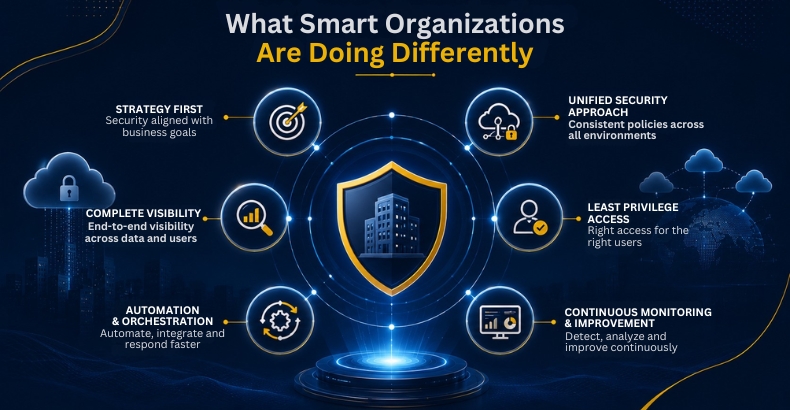
Forward-looking businesses are treating cloud data security as a strategic architecture issue, not just an IT responsibility. They are designing systems where security works across platforms rather than inside silos.
Instead of reacting after breaches or compliance failures, they are integrating security directly into cloud governance, observability, and automation workflows. Many are also building Zero Trust security models, where access is continuously verified rather than assumed.
This shift helps organizations stay secure while maintaining agility across hybrid and multi-cloud environments.
Conclusion
Cloud adoption has changed how businesses store, move, and use data. As hybrid and multi-cloud environments continue to grow, security can no longer depend on isolated tools or platform-specific controls.
That is why cloud data security for hybrid and multi-cloud environments is becoming a core part of modern data strategy. It is about creating visibility, enforcing consistency, and maintaining trust across increasingly distributed ecosystems.
Because in a multi-cloud world, data may live everywhere.
But security must remain unified.
FAQs
Hybrid and multi-cloud environments increase complexity by spreading data across multiple platforms, making consistent security, governance, and visibility more difficult.
Common risks include misconfigured access controls, unmanaged integrations, inconsistent compliance policies, and limited visibility into data movement and ownership.
Data visibility helps organizations understand where data is stored, how it moves, and whether it is properly protected, enabling stronger governance and proactive security.
A strong strategy includes centralized identity and access management, consistent encryption, real-time monitoring, and clear data classification and ownership.
Organizations are strengthening security by integrating governance, observability, automation, and Zero Trust principles to maintain consistent protection across hybrid and multi-cloud platforms.