
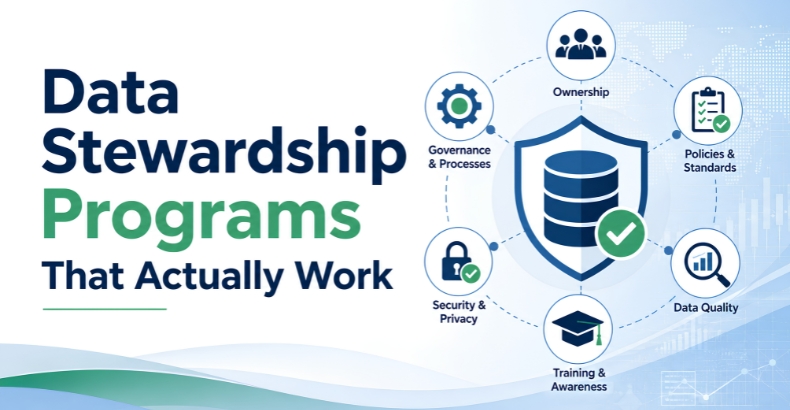
Why Data Ownership Is More Than Just a Role
As organizations become more data-driven, one challenge continues to grow quietly in the background: who is actually responsible for data?
Most businesses invest in dashboards, governance tools, cloud platforms, and analytics teams. But even with advanced systems in place, poor data quality, unclear ownership, and inconsistent usage still create major problems.
This is where data stewardship programs become essential. But the truth is, many stewardship initiatives exist only on paper. Roles are assigned, responsibilities are listed, and governance frameworks are documented, yet real accountability never becomes part of daily operations.
That’s why organizations are no longer asking whether they need data stewardship. They are asking a more practical question: How do you build data stewardship programs that actually work?
Why Data Stewardship Often Fails
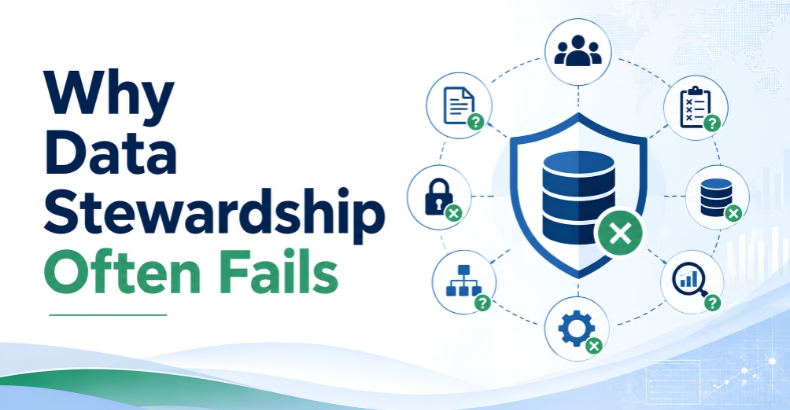
The problem begins when organizations assign “data steward” titles without giving teams the authority, visibility, or clear responsibilities to make decisions. As a result, stewardship becomes passive rather than operational.
Over time, this creates familiar challenges. Data quality issues go unresolved, ownership becomes unclear, and departments begin managing data differently. Instead of creating consistency, governance becomes fragmented.
What Effective Data Stewardship Really Looks Like
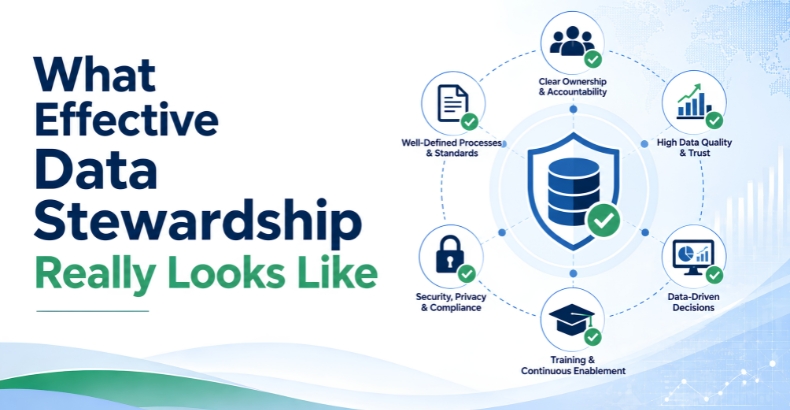
A successful data stewardship program is not just about assigning people; it is about building responsibility into workflows.
Strong stewardship creates clarity around who owns data, how quality is maintained, and how issues are resolved before they affect analytics, reporting, or business decisions.
When stewardship is done right, it becomes a bridge between business teams, governance leaders, and technical teams.
At its core, effective stewardship focuses on:
- Clear ownership of critical data assets
- Accountability for quality and consistency
- Visibility into usage, policies, and trust
Without these foundations, stewardship becomes a title without impact.
Why Programs Fail to Scale
Many organizations launch stewardship programs with good intentions, but they struggle when scale increases.
As data expands across departments, cloud systems, analytics platforms, and AI models, responsibilities become harder to manage manually. If stewardship depends only on meetings, spreadsheets, or disconnected governance processes, it quickly becomes slow and reactive.
This is where many programs lose momentum. Teams begin seeing stewardship as overhead instead of value.
What Smart Organizations Are Doing Differently
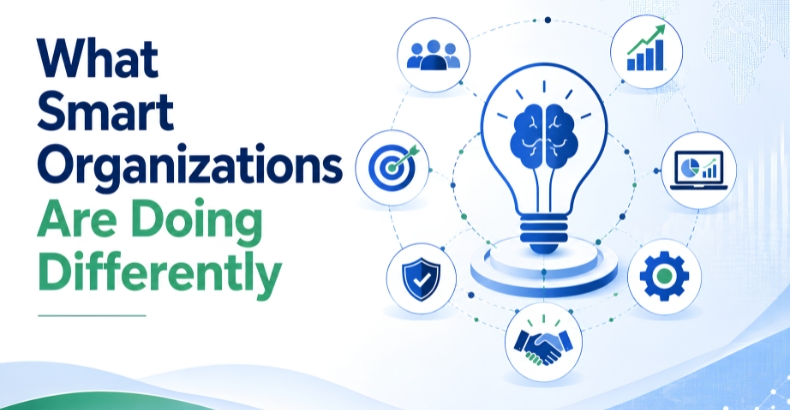
The most effective businesses treat data stewardship as an operational practice, not an administrative task. They embed stewardship into everyday workflows so accountability becomes continuous rather than occasional.
A few practical shifts include:
- Defining ownership at the data-domain level instead of vague departmental responsibility
- Connecting stewards with governance, quality, and metadata systems
- Making stewardship measurable through quality KPIs and issue resolution tracking
This helps organizations scale trust without creating unnecessary bureaucracy.
The Real Business Impact
When data stewardship programs actually work, the impact goes far beyond governance.
Data becomes more reliable, analytics become more trustworthy, and teams spend less time resolving confusion around ownership or quality issues. Decision-making improves because business leaders can trust the data behind reports, AI models, and strategic planning.
Most importantly, stewardship reduces risk while improving operational efficiency.
Conclusion
Data stewardship is not just a governance role; it is a foundation for trust in modern data environments.
The organizations that succeed are not the ones that simply assign stewards. They are the ones that make stewardship visible, measurable, and part of daily workflows.
FAQs
A data stewardship program establishes clear ownership, accountability, and responsibility for maintaining data quality, consistency, and trust across the data lifecycle.
Many programs fail because stewardship roles lack clear authority, accountability, and integration into daily workflows, making governance difficult to enforce.
An effective program focuses on clear data ownership, accountability for data quality, visibility into data usage, and collaboration between business and technical teams.
Organizations improve stewardship by assigning ownership at the data-domain level, connecting stewards with governance and metadata systems, and tracking quality through measurable KPIs.
Effective data stewardship improves data quality, strengthens trust in analytics, supports better decision-making, reduces operational risk, and increases organizational efficiency.