
Introduction
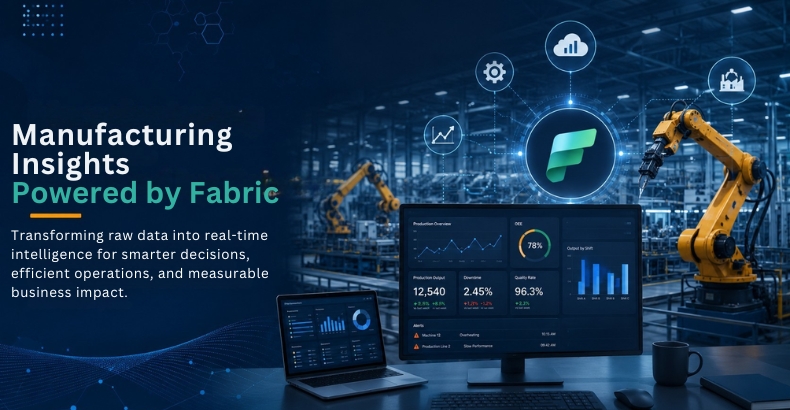
Modern manufacturing is powered by data as much as it is by machines. Every production line, IoT sensor, ERP system, and warehouse application generates valuable information that can improve efficiency, reduce costs, and prevent downtime.
The challenge is that this data is often scattered across different systems, making it difficult to gain a complete view of operations.
Microsoft Fabric solves this by bringing data, analytics, AI, and business intelligence together on one unified platform. It helps manufacturers turn disconnected data into real-time insights, enabling faster decision-making, improved productivity, and smarter operations.
Why Traditional Manufacturing Analytics Falls Short
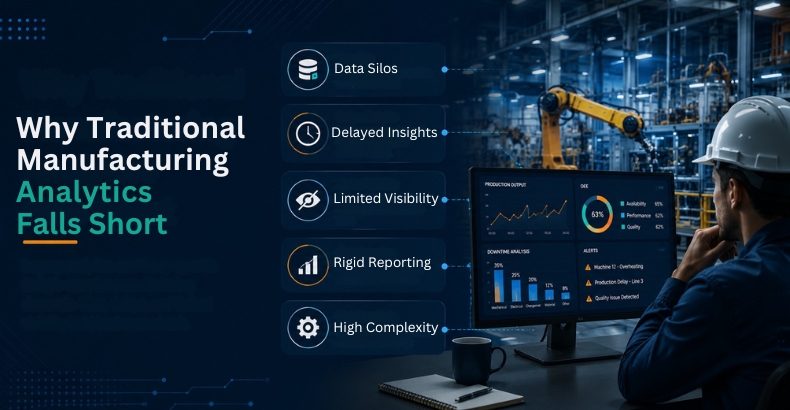
Over the years, manufacturers have adopted ERP systems, Manufacturing Execution Systems (MES), IoT devices, warehouse software, and quality management platforms. While each solution performs its own function effectively, they rarely communicate seamlessly with one another.
As a result, businesses often face challenges such as the following:
- Different departments relying on different reports.
- Delayed visibility into production issues.
- Limited inventory and supply chain transparency.
- Unexpected equipment failures and downtime.
- Time-consuming manual reporting.
Imagine discovering a production bottleneck only after customer deliveries have been delayed. By the time reports reach decision-makers, the opportunity to prevent the issue has already passed.
What Is Microsoft Fabric?
Think of Microsoft Fabric as the central hub for your manufacturing data.
Instead of managing separate tools for data storage, engineering, analytics, reporting, and AI, Fabric brings everything together in a single connected environment. At the heart of the platform is OneLake, a unified data foundation that stores and connects information from ERP systems, MES applications, IoT sensors, CRM platforms, warehouse software, and cloud services.
This unified approach creates a single source of truth, ensuring that every department works with the same reliable information. Whether you’re monitoring production, reviewing inventory, or analyzing financial performance, everyone has access to consistent, up-to-date data.
How Microsoft Fabric Improves Manufacturing Operations
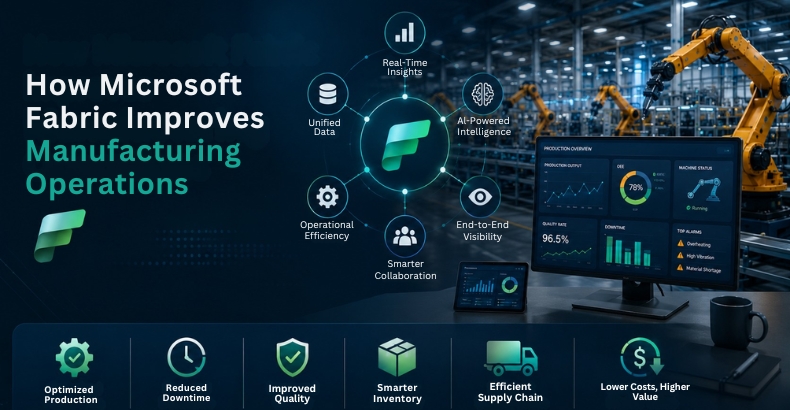
The real value of Microsoft Fabric lies in its ability to transform live operational data into actionable insights.
Imagine a production machine begins consuming more power than usual. In many factories, this issue may only appear in a report hours later, after production has slowed or equipment has failed.
With Microsoft Fabric, sensor data is analyzed continuously. AI detects unusual patterns, dashboards refresh in real time, and maintenance teams receive alerts before the problem becomes critical.
This proactive approach helps manufacturers:
- Reduce unexpected downtime.
- Improve product quality.
- Optimize production schedules.
- Monitor inventory more accurately.
- Respond more quickly to operational risks.
Instead of spending valuable time investigating problems, teams can focus on preventing them.
A Real-World Example
Consider a manufacturing company operating multiple production plants across different locations.
Previously, each plant maintained separate reports using different software systems. Comparing production efficiency, machine utilization, quality metrics, and inventory required significant manual effort and often took days to complete. By the time leadership reviewed the reports, the information was already outdated.
After implementing Microsoft Fabric, data from every facility flows automatically into OneLake. Interactive Power BI dashboards provide a real-time view of production, equipment performance, inventory levels, and quality metrics across all locations.
AI identifies bottlenecks, predicts maintenance requirements, and highlights supply chain risks before they impact customer deliveries. Managers spend less time preparing reports and more time improving business performance.
Business Benefits of Microsoft Fabric
Microsoft Fabric delivers much more than attractive dashboards. It creates measurable business value by connecting people, processes, and data across the organization.
Manufacturers can benefit from:
- Faster access to real-time operational insights.
- Reduced downtime through predictive maintenance.
- Better product quality through continuous monitoring.
- Improved inventory and supply chain planning.
- Increased productivity through automation.
- AI-powered decision-making for faster responses.
- Better collaboration across departments.
When every team works from the same trusted data, decisions become faster, smarter, and more consistent.
The Future of Smart Manufacturing
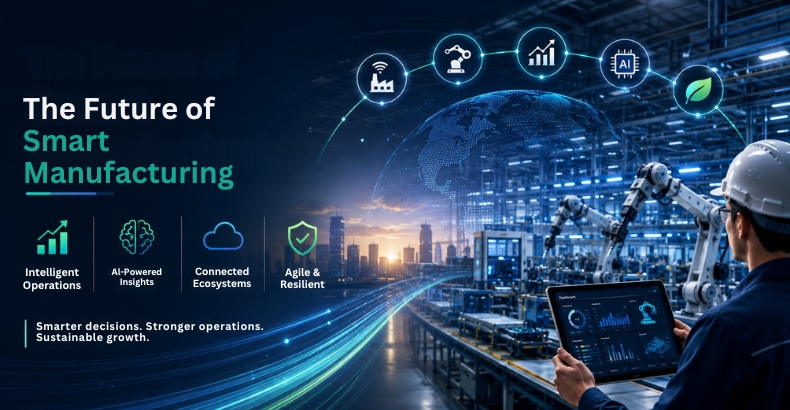
Manufacturing is rapidly evolving, with AI, robotics, Industrial IoT, automation, and digital twins becoming part of everyday operations. As factories become more connected, the volume of operational data will continue to grow.
Future-ready manufacturers need platforms that do more than store information. They need systems capable of processing real-time data, generating intelligent recommendations, and supporting AI-driven decision-making.
Microsoft Fabric provides that foundation. Its integration with Power BI, AI services, and real-time analytics enables organizations to move beyond traditional reporting and build intelligent manufacturing ecosystems.
Companies that invest in connected analytics today will be better prepared for tomorrow’s challenges.
Conclusion
Modern manufacturing success depends on how effectively businesses use data to improve efficiency, reduce costs, and make faster decisions.
Microsoft Fabric helps manufacturers connect data, eliminate silos, and turn real-time insights into smarter actions. As digital transformation continues to reshape the industry, organizations that embrace connected analytics and AI will be better equipped to improve productivity, remain competitive, and build future-ready manufacturing operations.
FAQs
Microsoft Fabric connects manufacturing data to deliver real-time insights, improve efficiency, and support faster decision-making.
Yes. Real-time analytics and AI can identify unusual equipment patterns and support predictive maintenance.
Fabric brings data from ERP, MES, IoT, warehouse, and other systems into a unified environment through OneLake.
Yes. Fabric can analyze operational data continuously and provide up-to-date insights through Power BI and real-time analytics.
Key benefits include reduced downtime, improved quality, better inventory planning, increased productivity, and AI-powered decision-making.