
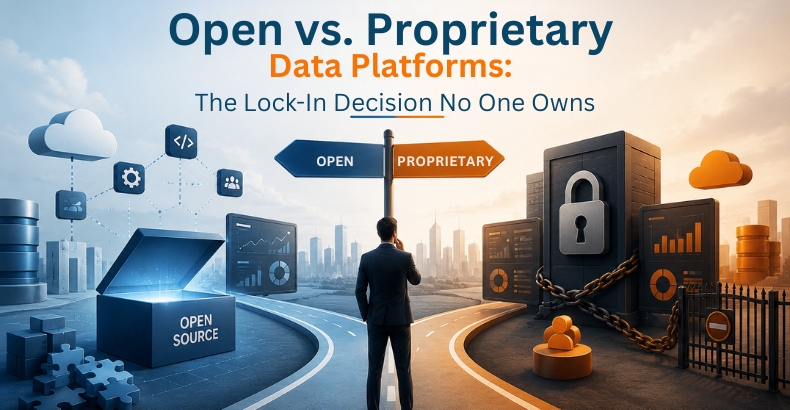
Why the Biggest Data Risk Starts After You Choose
When organizations choose a data platform, the conversation usually begins with familiar questions. Can it scale? Will it support AI? Is it secure? Does it fit within budget?
These questions matter. But one of the most important questions is often ignored: What happens after you commit?
That is where the real debate between open and proprietary data platforms begins. This is not only a technology decision; it is a long-term business choice that affects cost, flexibility, innovation, and control.
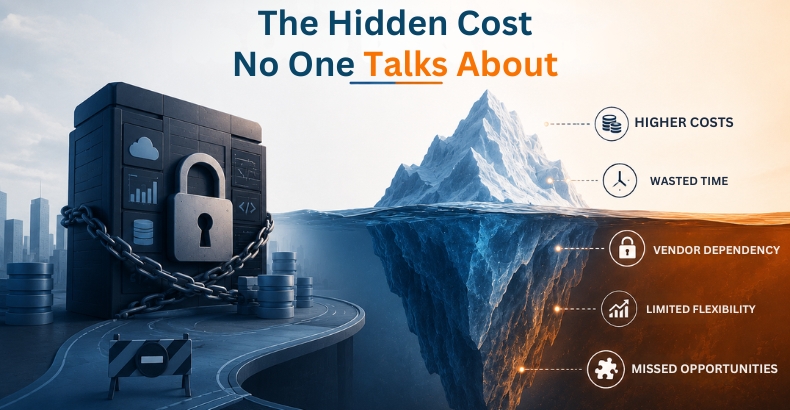
The Hidden Cost No One Talks About
At the start, most platforms look efficient. Proprietary solutions especially feel attractive because they simplify adoption. Everything feels connected, supported, and easier to manage.
For many businesses, this creates quick wins. Teams can move faster, deployment becomes easier, and short-term complexity is reduced.
But over time, that convenience can come with a cost: vendor lock-in.
What once felt simple can slowly become restrictive. Switching platforms becomes expensive. Integrations become harder. Innovation can slow because everything depends on one ecosystem.
That’s why lock-in is not just a technical issue; it’s a business risk.
Understanding Open Data Platforms
Open data platforms take a different approach. They focus on flexibility and interoperability instead of deep vendor dependency.
Rather than locking businesses into one ecosystem, they are often built on open standards and modular architecture.
This gives organizations benefits such as the following:
- Better portability across tools and environments
- Easier integration with evolving technologies
- More customization opportunities
- Reduced long-term vendor dependency
For businesses planning for long-term growth, this flexibility can be a major advantage.
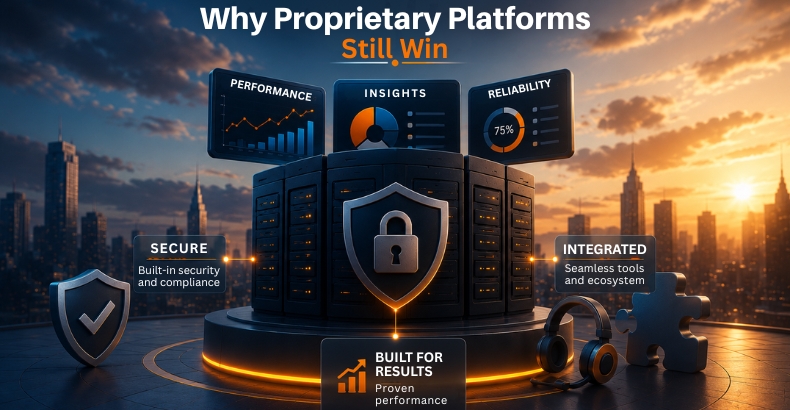
Why Proprietary Platforms Still Win
If open platforms offer flexibility, then why do proprietary platforms still dominate enterprise environments?
The answer is simple: convenience and speed.
Proprietary platforms often reduce operational complexity. Organizations don’t have to manage multiple disconnected systems. Security, support, and infrastructure are usually tightly integrated.
This helps companies move faster when priorities are
- Faster deployment
- Simplified maintenance
- Centralized support
- Stable enterprise environments
For many teams, this is exactly what they need.
The Lock-In Decision No One Truly Owns
Here’s where things get uncomfortable.
In many organizations, no one truly owns the lock-in decision.
IT teams often evaluate infrastructure. Data teams focus on analytics.
Leadership looks at budget, speed, and scalability. But very few people stop to ask what happens five years later.
Questions like:
- How hard will migration be?
- Can workloads move across cloud environments?
- Will costs still make sense as data grows?
- How much dependency on one vendor is acceptable?
These are strategic questions, yet they’re often ignored.
That is why platform lock-in quietly becomes one of the most underestimated risks in digital transformation.
Open vs. Proprietary: What Really Matters?
The decision is not about asking which platform is better.
The real question is, which platform fits your long-term business priorities?
If an organization values speed, stability, and simplified operations, proprietary platforms can be a strong fit.
If flexibility, portability, and long-term control matter more, open platforms may reduce future risks.
That balance often creates the strongest long-term strategy.
What Happens When Lock-In Is Ignored?
At first, the impact may not be obvious. But over time, businesses begin to feel it.
Common risks include:
- Rising licensing and infrastructure costs
- Limited flexibility for innovation
- Complex migrations
- Reduced bargaining power with vendors
- Slower adoption of new AI or analytics tools
What feels efficient today can become a dependency tomorrow.
A Smarter Way to Think About Platform Strategy
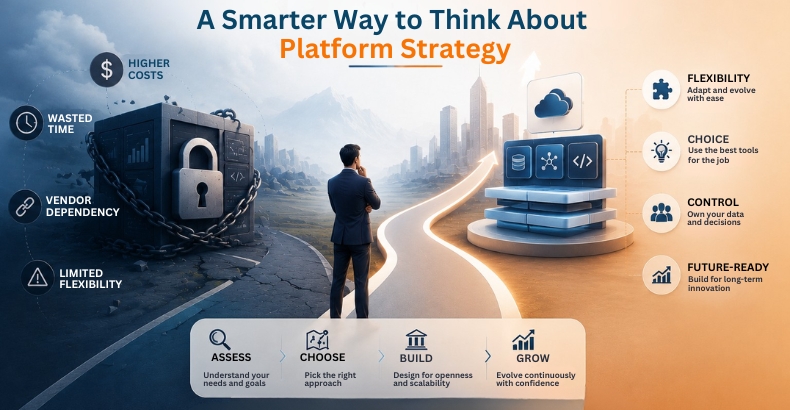
Instead of asking “Should we choose open or proprietary?” organizations should think deeper.
A smarter strategy starts with questions like
- How important is workload portability?
- How fast is our data ecosystem changing?
- Do we need deep customization?
- Can this platform support future AI growth?
- Will this architecture still work 3–5 years from now?
These questions create stronger, future-ready decisions.
Conclusion
The debate between open and proprietary data platforms is not really about software; it’s about ownership, flexibility, and long-term resilience. Proprietary platforms can offer speed, simplicity, and strong enterprise support. Open platforms can deliver adaptability, portability, and reduced dependency. Both have value.
The smartest organizations are not choosing based only on short-term convenience. They are evaluating how platform decisions affect future cost, innovation, and independence.
Because the biggest risk is not choosing open or proprietary.
The real risk is making a platform decision without understanding the lock-in it creates.
FAQs
Vendor lock-in occurs when an organization becomes highly dependent on a single data platform, making migration, integration, and future changes more difficult and costly.
Open data platforms provide greater flexibility, easier integration, improved portability, more customization options, and reduced long-term vendor dependency.
Organizations choose proprietary platforms because they offer faster deployment, simplified maintenance, centralized support, and a more integrated enterprise environment.
Vendor lock-in can lead to higher licensing costs, limited flexibility, complex migrations, reduced bargaining power, and slower adoption of new technologies.
Organizations should evaluate their long-term priorities, including flexibility, portability, scalability, future AI needs, and the level of vendor dependency they are willing to accept.